Archives

Castles of Nottinghamshire

Castles of Nottinghamshire was the subject of James Wright’s talk at the April meeting of the Edwinstowe Historical Society. For many people Nottingham and Newark castles immediately spring to mind but there have been many others which have different classifications.  There are 9  known as Motte and Bailey (Worksop, Cuckney, Bothamsall, Haughton, Laxton, Egmanton, Annesley, Aslockton, and East Bridgford);   4 Fortified sites (Kingshaugh, Clipstone Peel, King John’s Palace and Lowdham);  3  Fortified manor Houses (Kirkby-in-Ashfield, Greasley, and Strelley); and 1 Ringwork (Jordan Castle – Wellow).   Sadly all that remains of most of the Nottinghamshire castles are mounds of earth and, although most sites are on private land, often a glimpse may be obtained from the roadside.

Castles which first appeared after the Norman Conquest were for defence purposes, and later were designed for comfort, so the explanation of what constituted a castle in 1100 would differ in 1400.  Archaeological excavations continue to yield many surprises such as those at Strelley Hall and Nottingham Castle.   Mr Wright acknowledged that help provided by local groups, such as the Edwinstowe Historical Society, had made a useful contribution to the studies of some sites.

At the meeting on Wed. 20th June, there will be a power point presentation highlighting the history of the Edwinstowe Women’s Institute which was founded in 1920.   There are no meetings during July and August. However, the new programme of talks will begin on Wed. 18th September, 2019.

Meetings are held in the Church Rooms, Mansfield Road, Edwinstowe, NG21 9NJ on the third Wednesday of the month, commencing at 2.00 p.m. and lasting for approximately 2 hours.  Tea/coffee and biscuits are available.  Annual membership is £12 and visitors are welcome at a charge of £3.  Further information is available on the website www.edwinstowehistory.org.uk. And enquiries may be made to EdwinstoweHistorySoc@gmail.com
March 2019 Update

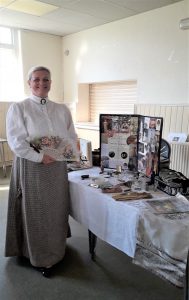
On Wed. 20th March, members of the Edwinstowe Historical Society and visitors spent an enjoyable afternoon in the company of Jo Golby who described the life of a lady’s maid when working in the great houses of the 19th century.
Considered to be the equivalent of the master’s valet she was expected to be educated, discreet, honest and have exceptional needlework skills.  Duties would include helping to dress and undress her mistress (sometimes 3 or 4 times a day according to the occasion); ensure all clothes were kept in immaculate condition; and know how to fashion her hair in the latest style.  The day would begin one hour before her mistress arose, and terminate one hour after her mistress retired which might be 3 or 4 o’clock in the morning!  She would enjoy the privacy of her own room with her own personal effects, and travel with her mistress on visits to other houses.  Her wage would be between £34 and £36 per annum, with board, and often would receive her mistress’s cast-off clothing.  Sometimes a grace and favour cottage would be her reward when she was retired.


The Annual General Meeting will take place on Wed. 15th May, which will be followed by a power point presentation highlighting the Ladies’ and Men’s bowling teams in Edwinstowe.  On Wed. 20th June, there will be a power point presentation outlining the history of the Edwinstowe Women’s Institute which was founded in 1920.

Further information is available on the website www.edwinstowehistory.org.uk.  And enquiries may be made to EdwinstoweHistorySoc@gmail.com

February 2019 Update

On Wed 20th February a well-attended gathering welcomed Bob Massey who presented an illustrated talk entitled “The Forest – Highway Robbery on a lonely stretch of road through Sherwood Forest”. Sherwood Forest once covered an area of approx. 100,000 acres between Nottingham and Worksop, and the road (now the A60) was part of an ancient route connecting London to York.

The route would have been no more than a footpath, and travellers would have had to be in a group to undertake a journey. The Hutt Inn, opposite Newstead Abbey gates, occupies the site of a 12th century garrison for men-at-arms who guarded the highway. Numerous notorious gangs of outlaws roamed the forest in Medieval times, but Nottingham’s most notorious highwayman and woman in the 17th century were Joan Phillips and Edwin Bracey. Joan was hanged in Nottingham in 1685 and Bracey died after being shot.  Often highwaymen ran inns which presented them with an opportunity to assess a traveller’s wealth so appropriate action could be taken when the traveller resumed his journey!  People arrested were hanged at Gallows Hill, Nottingham where the last execution took place in 1827.  From 1831 condemned prisoners were hanged in front of the Shire Hall in Nottingham.

With the introduction of the turnpike road between Nottingham and Mansfield in the 18th century traffic could move faster which helped to make travelling safer.

At the request of the RSPB the Society provided photos from the archive for the hoardings displayed in the forest close to the site of the old Visitor Centre.

The next meeting will take place on Wed. 20th March, when Jo Golby will present an illustrated talk about the “A Victorian Lady’s Maid”.

“Sorry couldn’t stop we had an important engagement in Sheffield.”

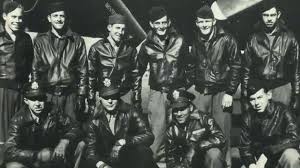
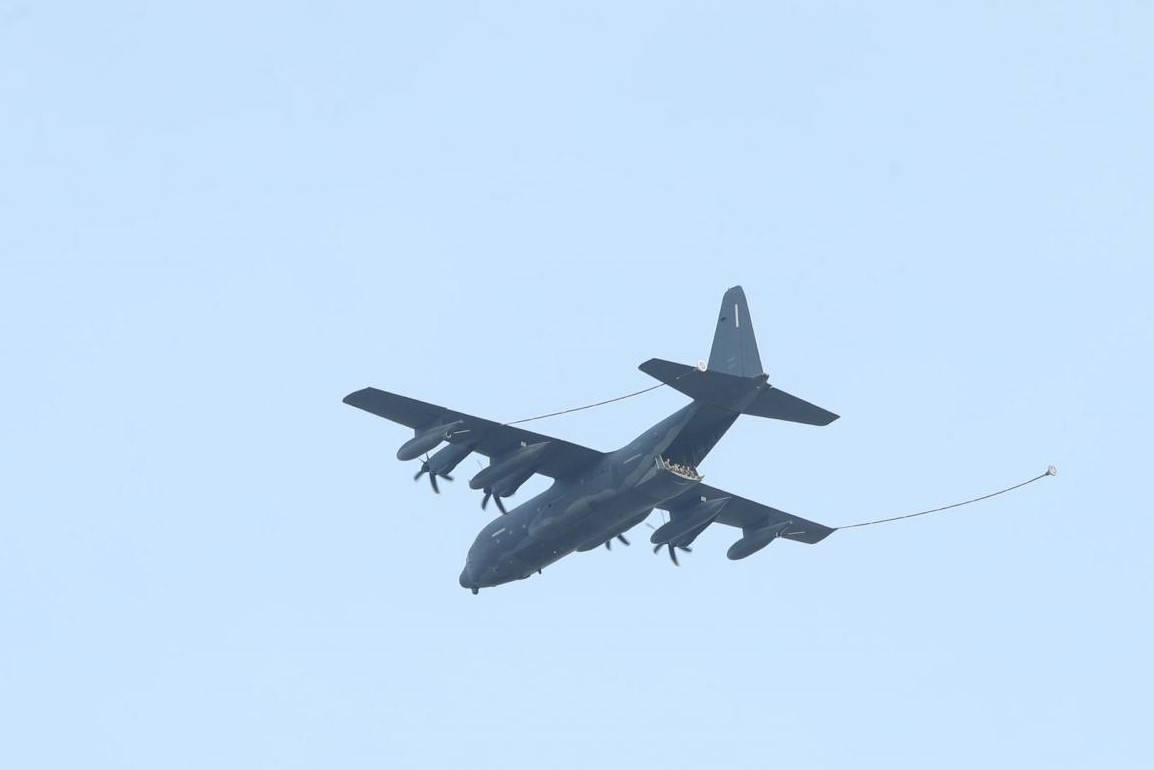
A flypast, honouring 10 American airmen who died when their plane crashed in Endcliffe Park, Sheffield 75 years ago took place today Friday 22nd February 2019.

75 years ago, eight year old Tony Foulds and his friends were on the park when they saw the plane, an American B-17 Flying Fortress, attempting an emergency landing. But when the pilot saw the children he diverted and crashed into trees nearby killing all those on board. Tony in memory of those brave men, who he believed saved his life, tended the memorial in the park for many decades.

The planes flew over Edwinstowe at approx. 8:30 am before they joined together over Church Warsop before their flight to Sheffield. Some of the planes then headed to Cambridge to do another flypast of the cemetery, where the ten American airmen were laid to rest.

  • 10 US airmen who died in Shefield


January 2019 Upate

In January members of the Edwinstowe Historical Society enjoyed the New Year lunch at Forest Lodge.  At the next meeting to be held on 20th February, Bob Massey will present an illustrated talk entitled “The Forest; its Highway Robbery”.  This is the story of the robbers and robbery on the lonely stretch of the road north through Sherwood Forest.  In contrast, on 20th March, Jo Golby will present “Life of a Ladies’ Maid in the Great Houses of the 19th Century.”

No doubt there will be a number of surprising “behind-the-scene” stories.

“Castles of Nottinghamshire” will be brought to life on 17th April, when James Wright will present his illustrated talk.

The archivists have been busy dealing with enquiries from people interested in learning about ancestors who once lived in Edwinstowe.

Following the recent excellent refurbishment of Edwinstowe Library, the Society has once again provided a photographic display.  This time the choice highlights the local village football teams that have entertained the people of Edwinstowe over the years.
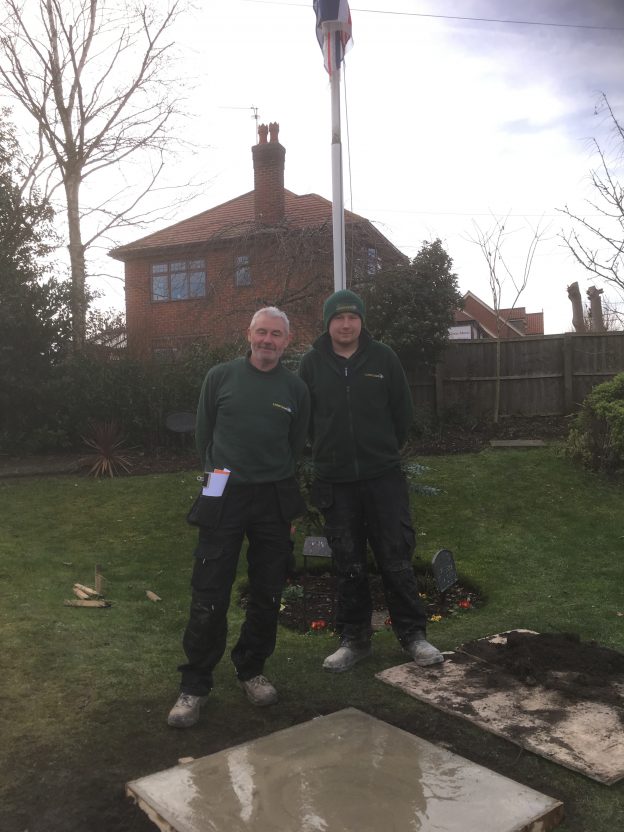
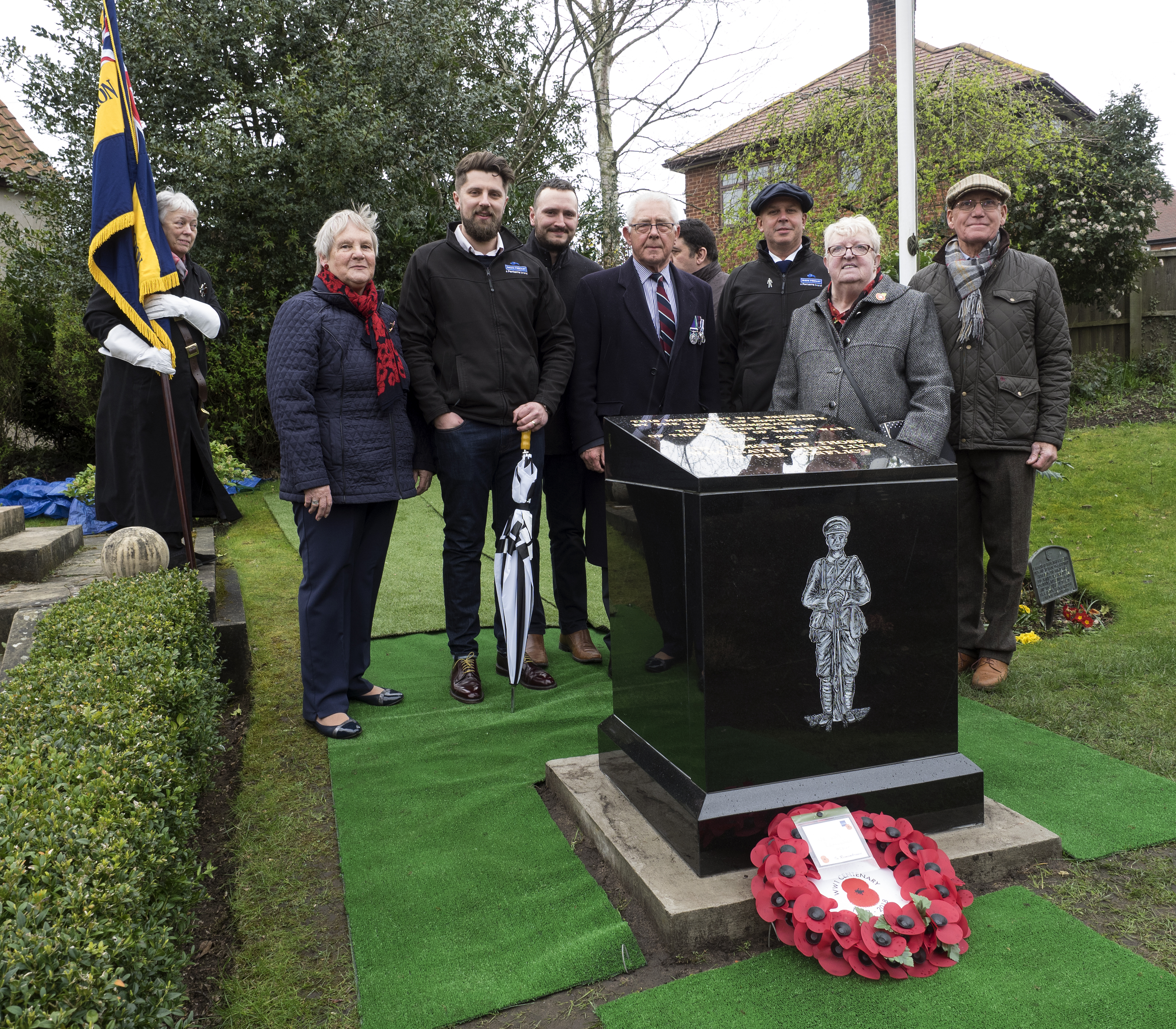


Sue Saddington, Chair of Notts. County Council and Shirley Moore (EHS)

Recent additions to the website relate to 2 members of the aristocracy who were actively involved with local organisations.  They were Lady Sibell Argles and Lady Eveline Maude, both of whom were highly respected. (See link to these  on people/families)

News Update 2018 and Edwinstowe Hall

Edwinstowe Hall

On Wed. 17th October, members enjoyed an interesting illustrated talk about Edwinstowe Hall (a listed building) which was one of three large houses in the village, the others being Edwinstowe House and Villa Real.  Built about 1702, possibly by the Duke of Newcastle, details of ownership and residents of the Hall during the ensuing years were listed to the present day, when it has once again become a private residence.  While some changes have taken place, it was remarkable to learn that since 1751 the drawing room plaster ceiling in the Rococo style has remained unchanged.  Thanks, were expressed to the Committee members who assembled the information and ensured the afternoon was a success.

The Society’s current display in the Edwinstowe Craft Centre lists some interesting facts about Sherwood Forest, including reference to many of its memorable trees.

The Prisoner of War Camp System

At a well-attended meeting in November Edwinstowe Historical Society members and visitors enjoyed an illustrated talk by Kevin Murphy about the Prisoner of War Camp system and the part played by Edwinstowe’s camp. Prisoners of War were detained in camps which reflected their risk to the nation.  Some of the local camps were at Welbeck Abbey, Rufford Abbey, Boughton, Carburton, Norton Cuckney, and Edwinstowe where the camp was sited to the north of the village cricket ground on the edge of the forest.  Prisoners were German, Italian and Ukrainian, based either in the camps or sometimes billeted out.  Edwinstowe‘s camp held Italians. Uniforms had a yellow dot on the back of the jackets and on one of the trouser legs.   Work was mainly agricultural. Two members shared their memories of seeing the POW’s when they were allowed outside the camps.

After hostilities ended some prisoners applied to remain in England and for their families to join them.  In Edwinstowe the camp was used to accommodate Displaced Persons from eastern European countries, most of whom worked down the pit, and others on farms.

Remembrance Sunday Parade 2018

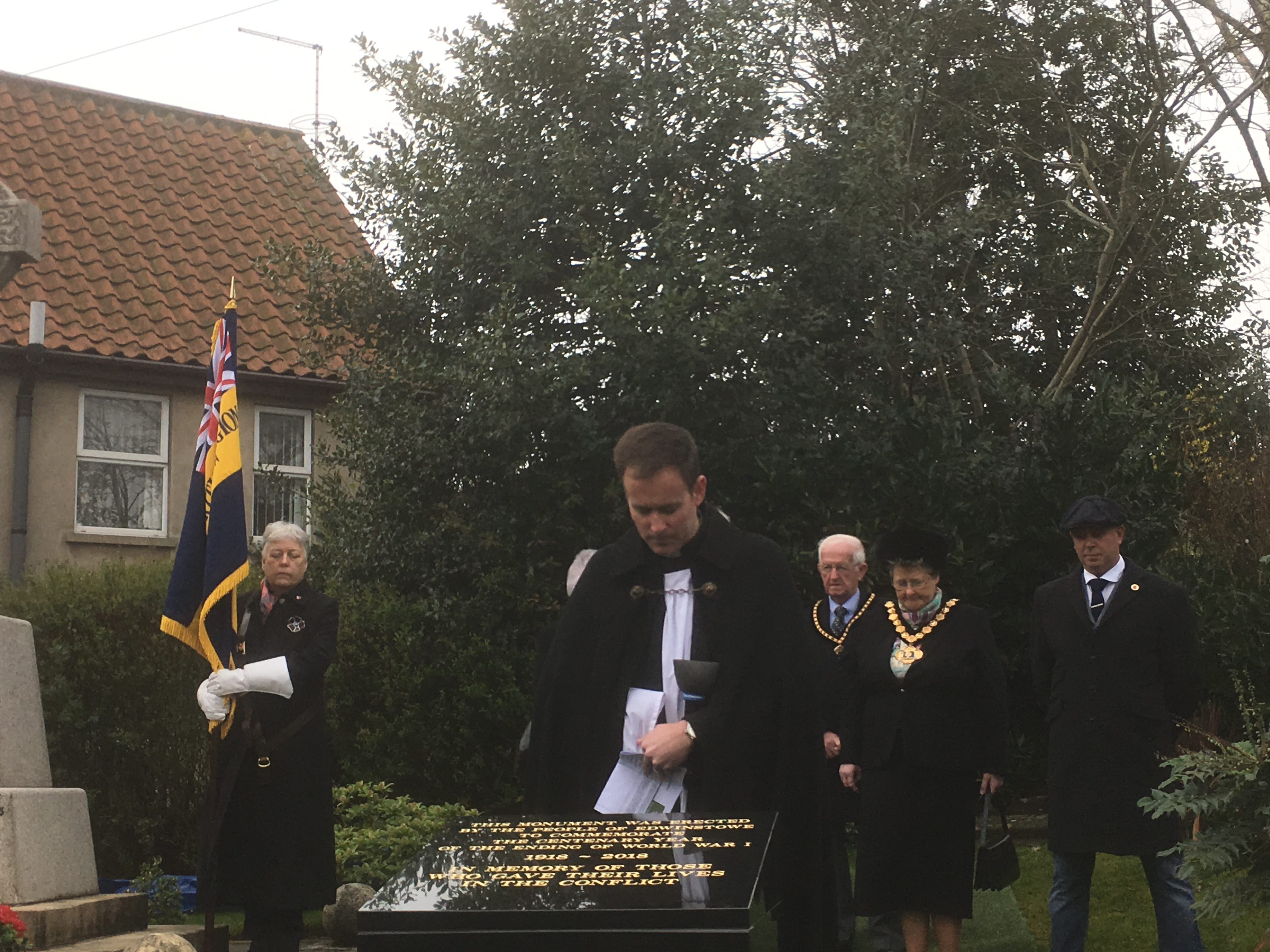
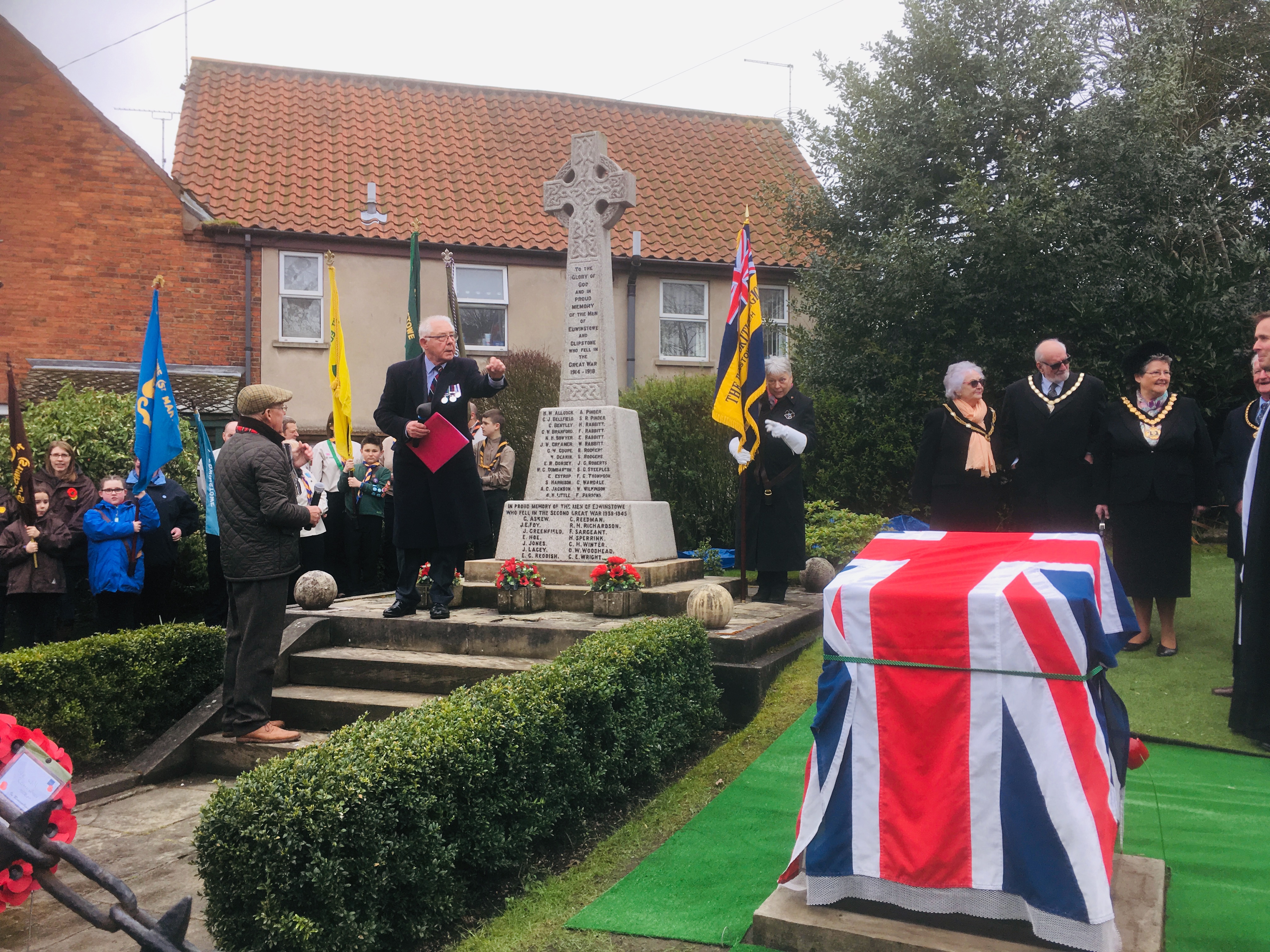
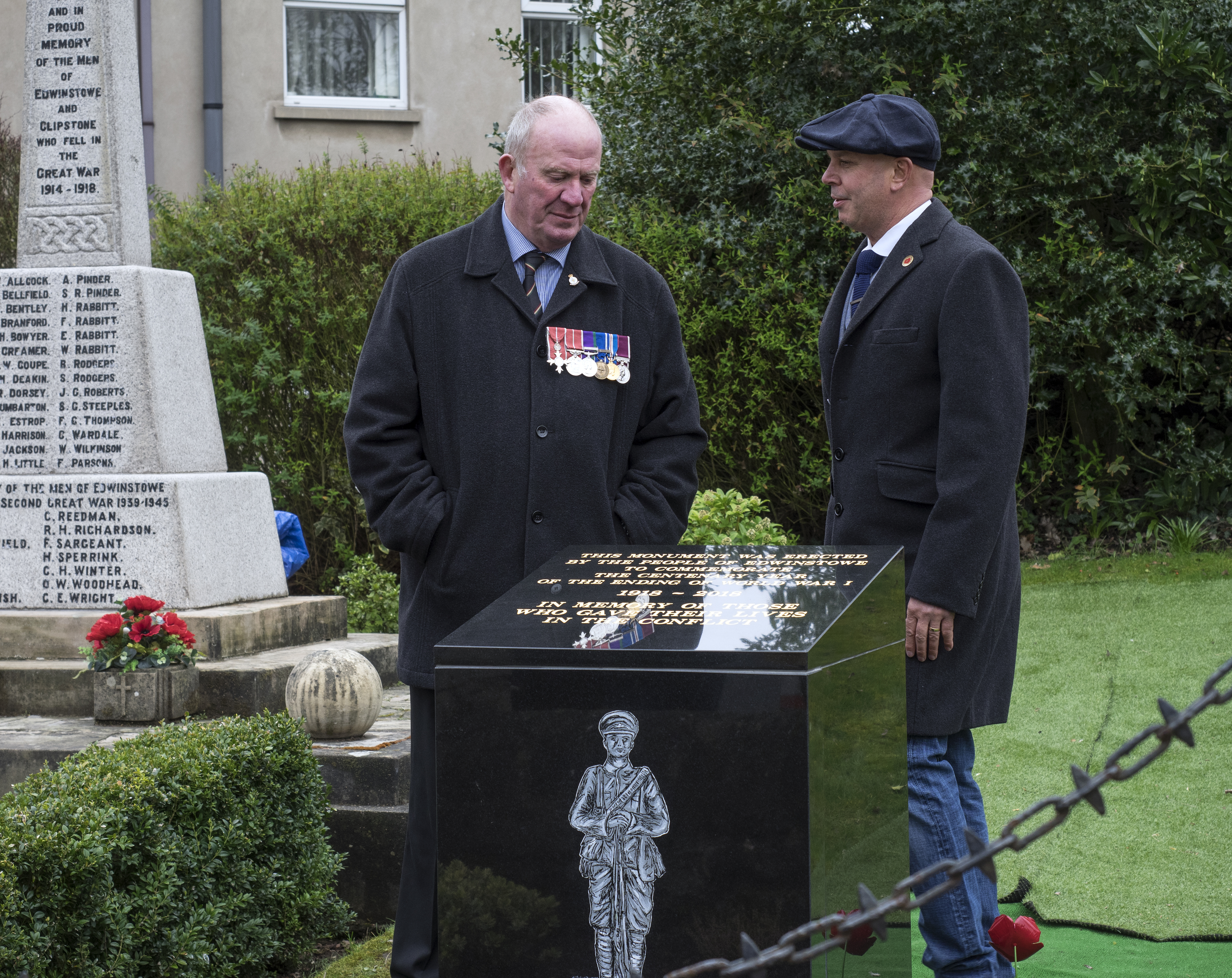
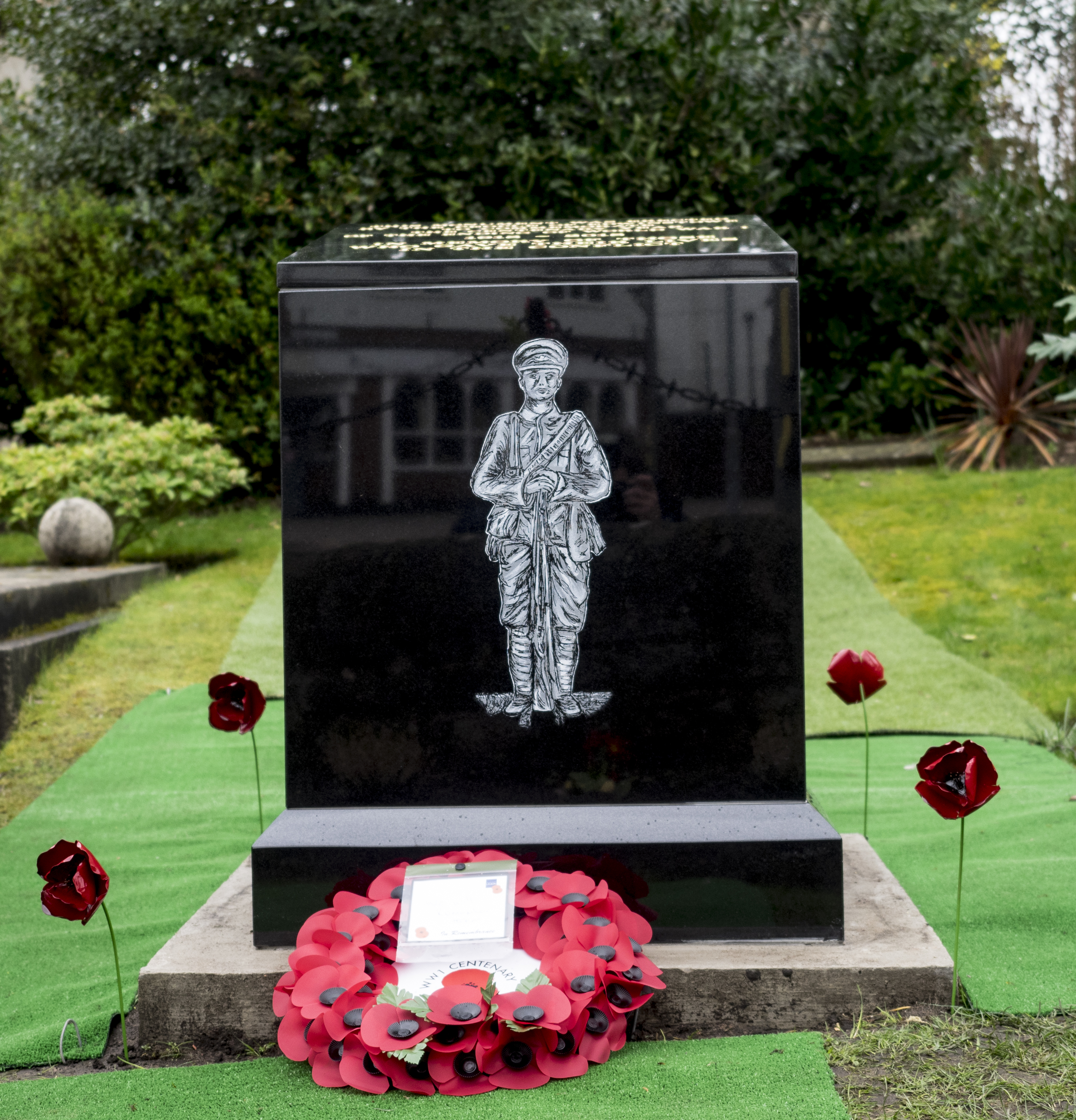
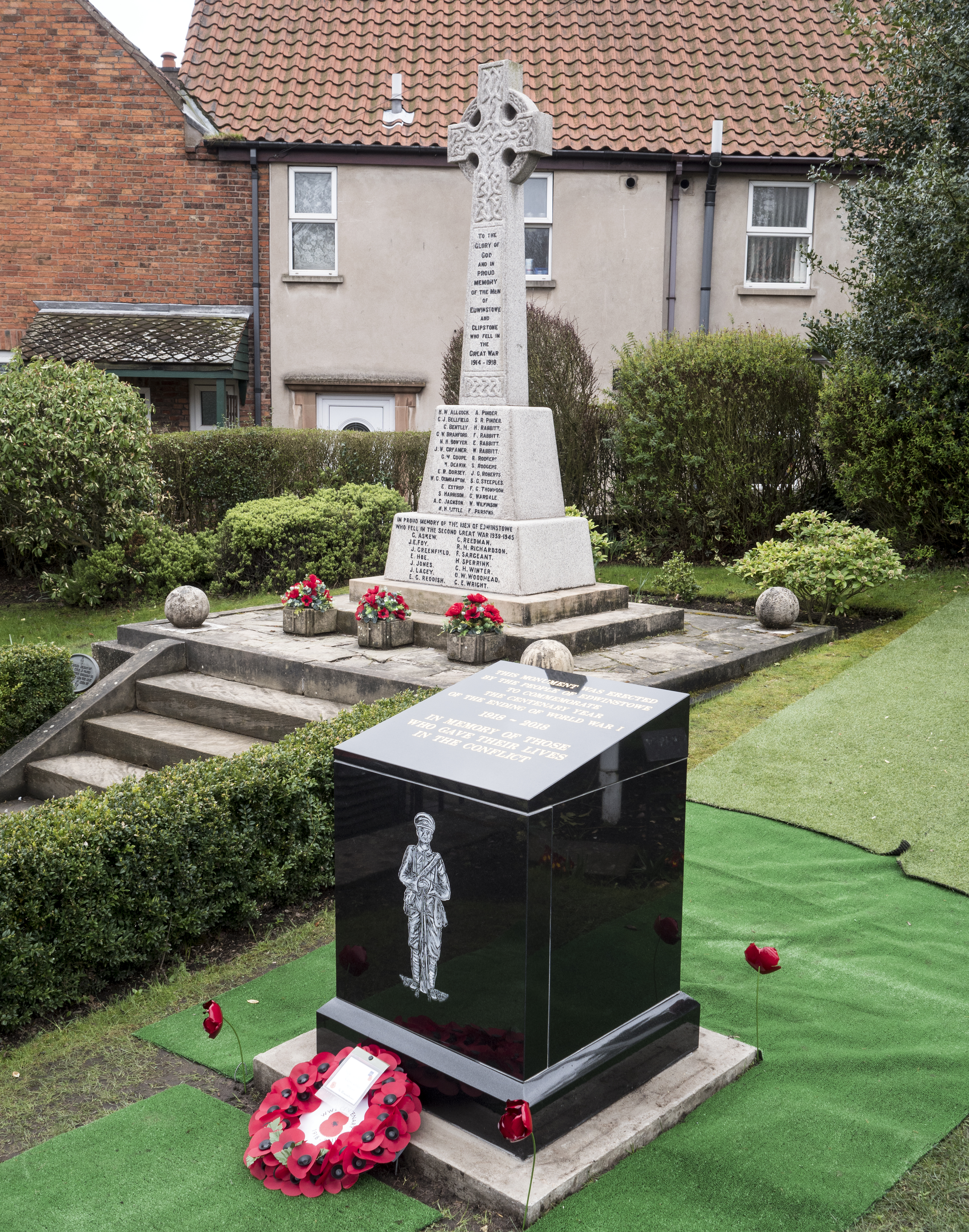
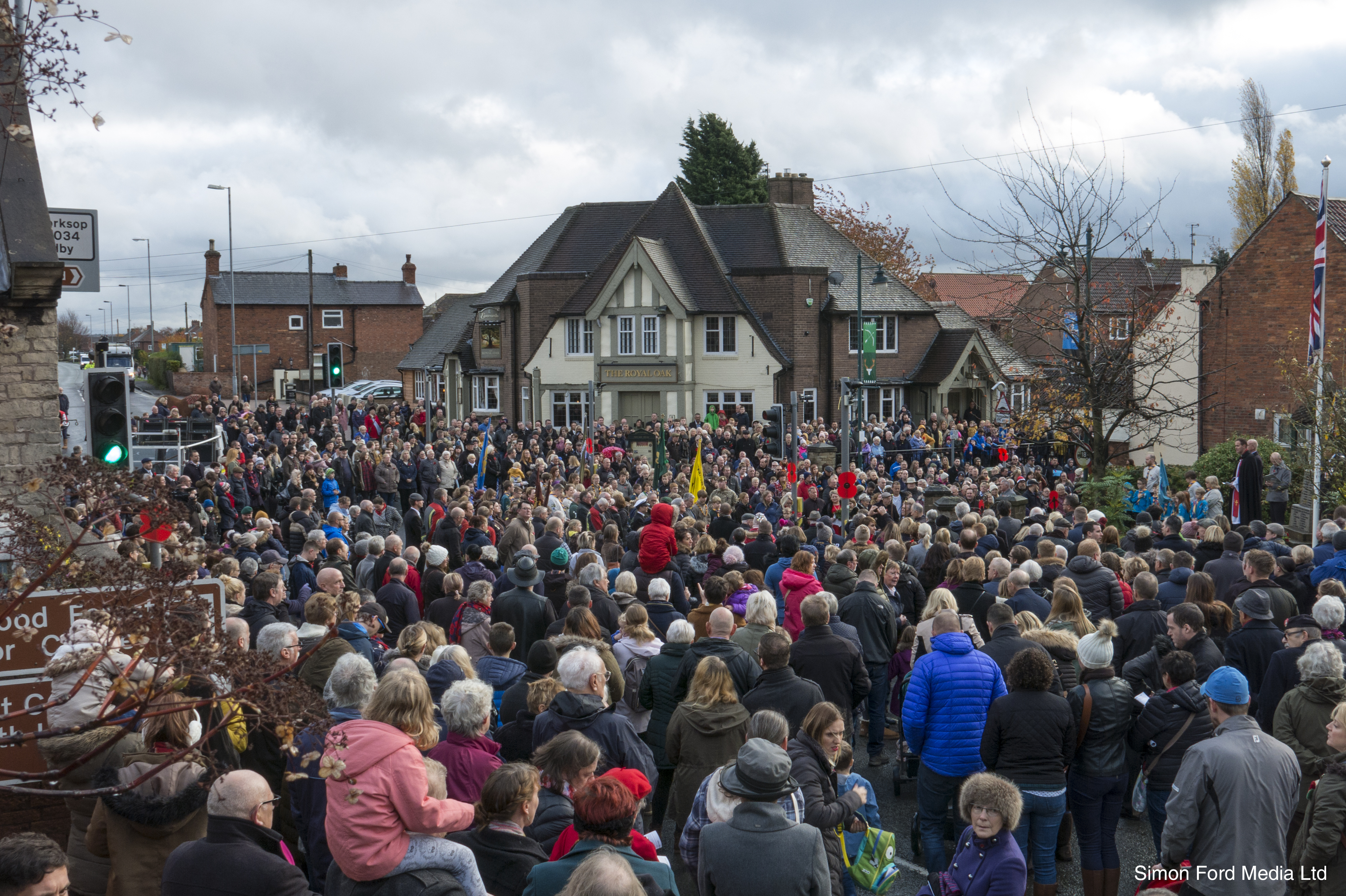
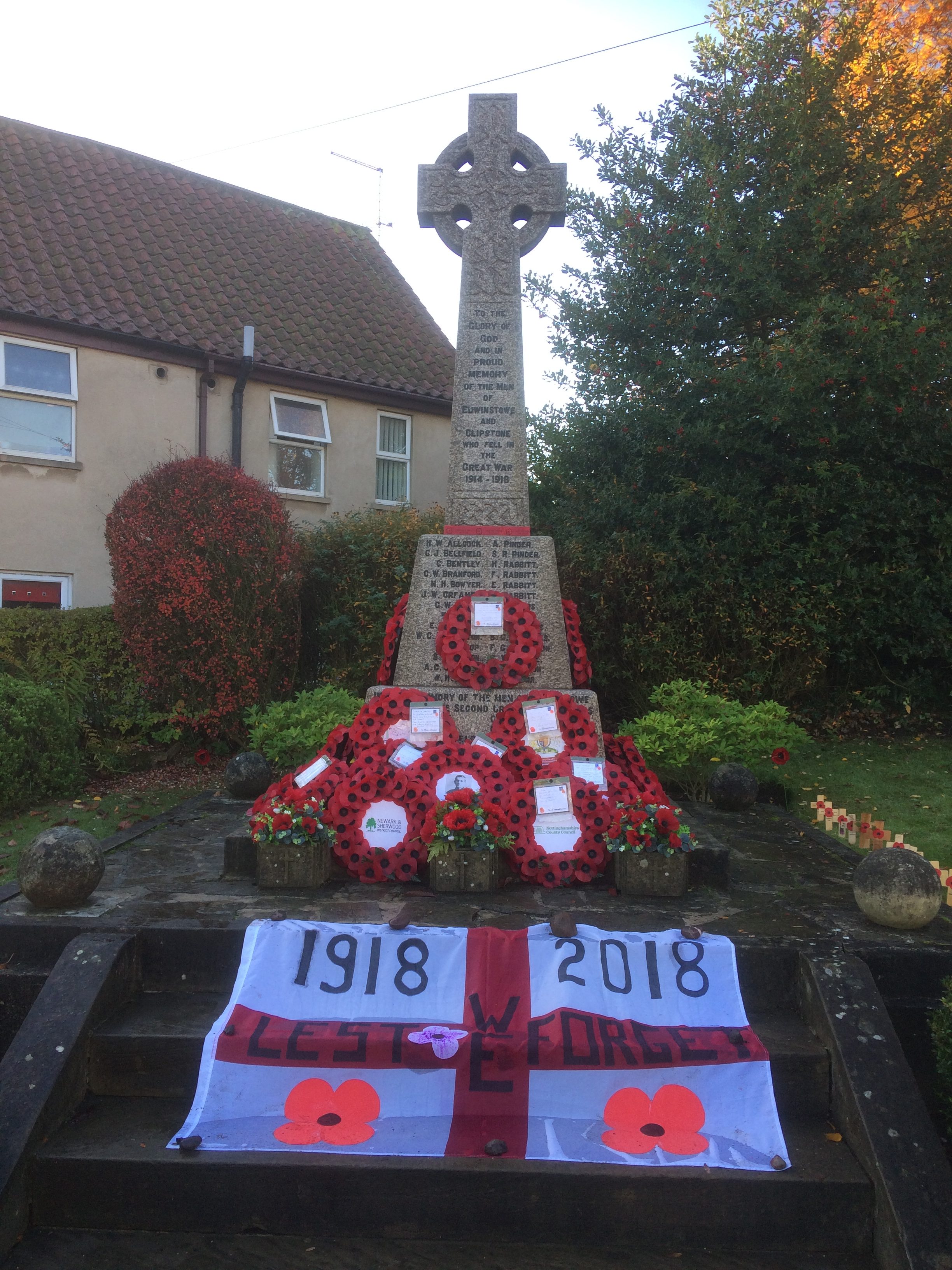
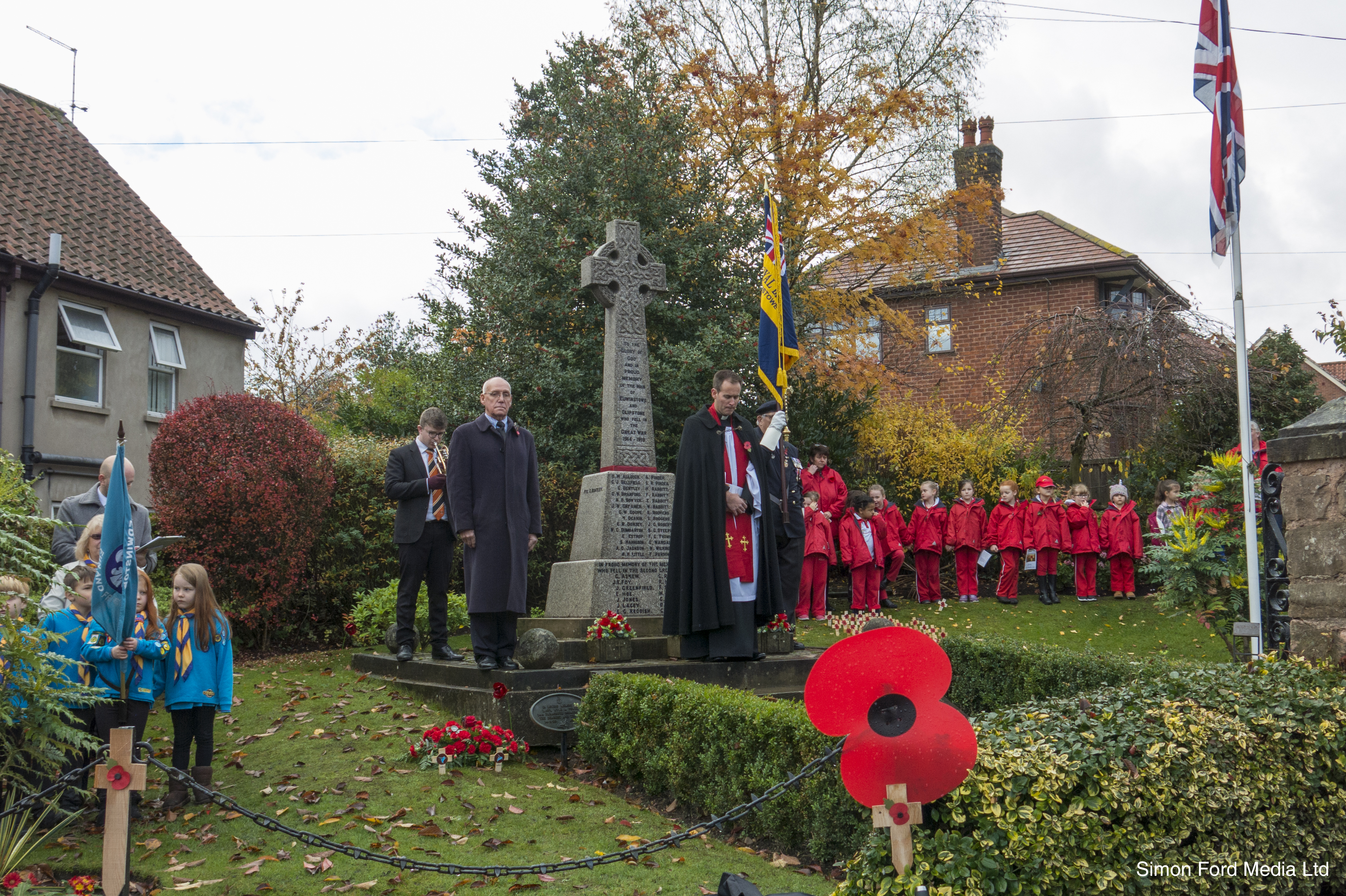
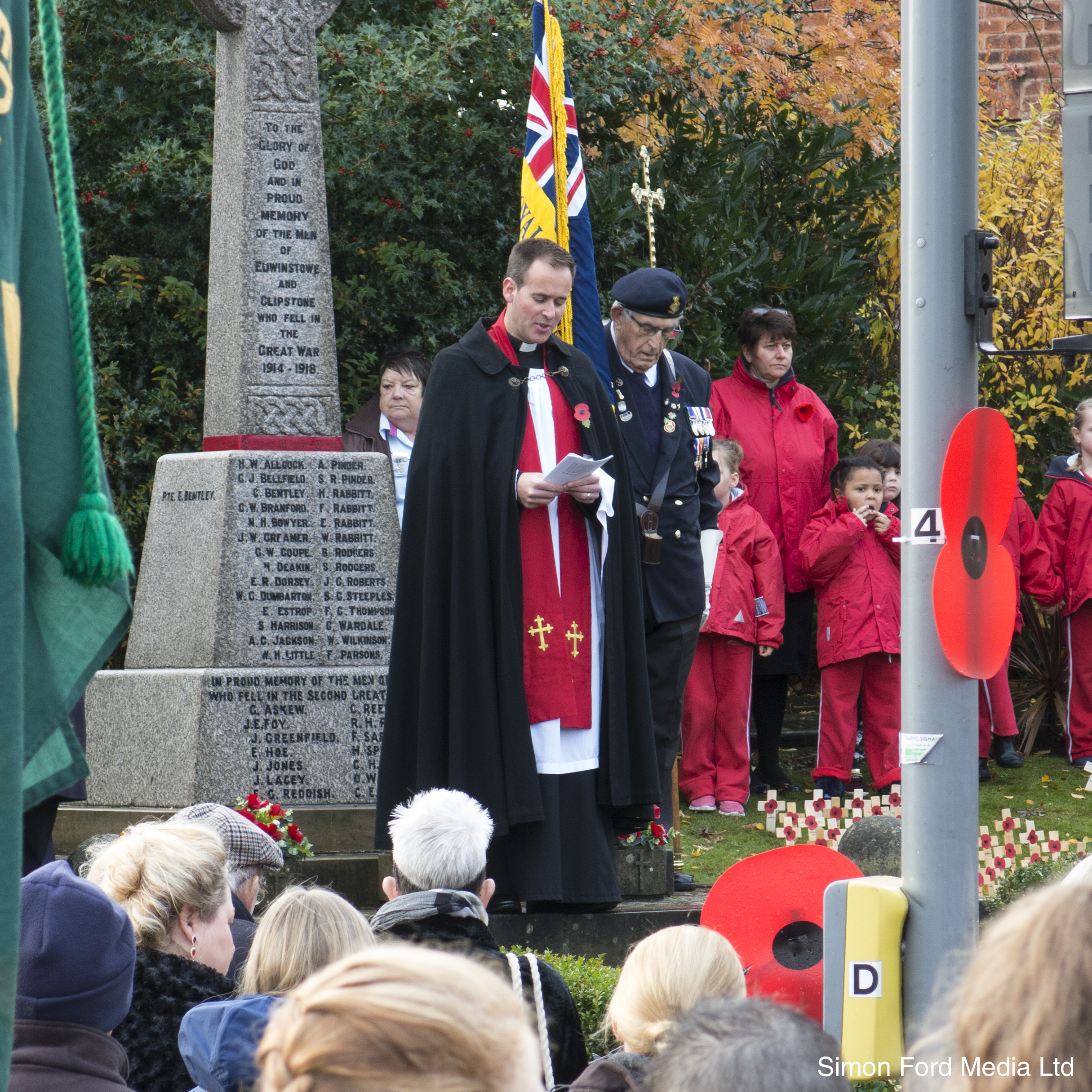
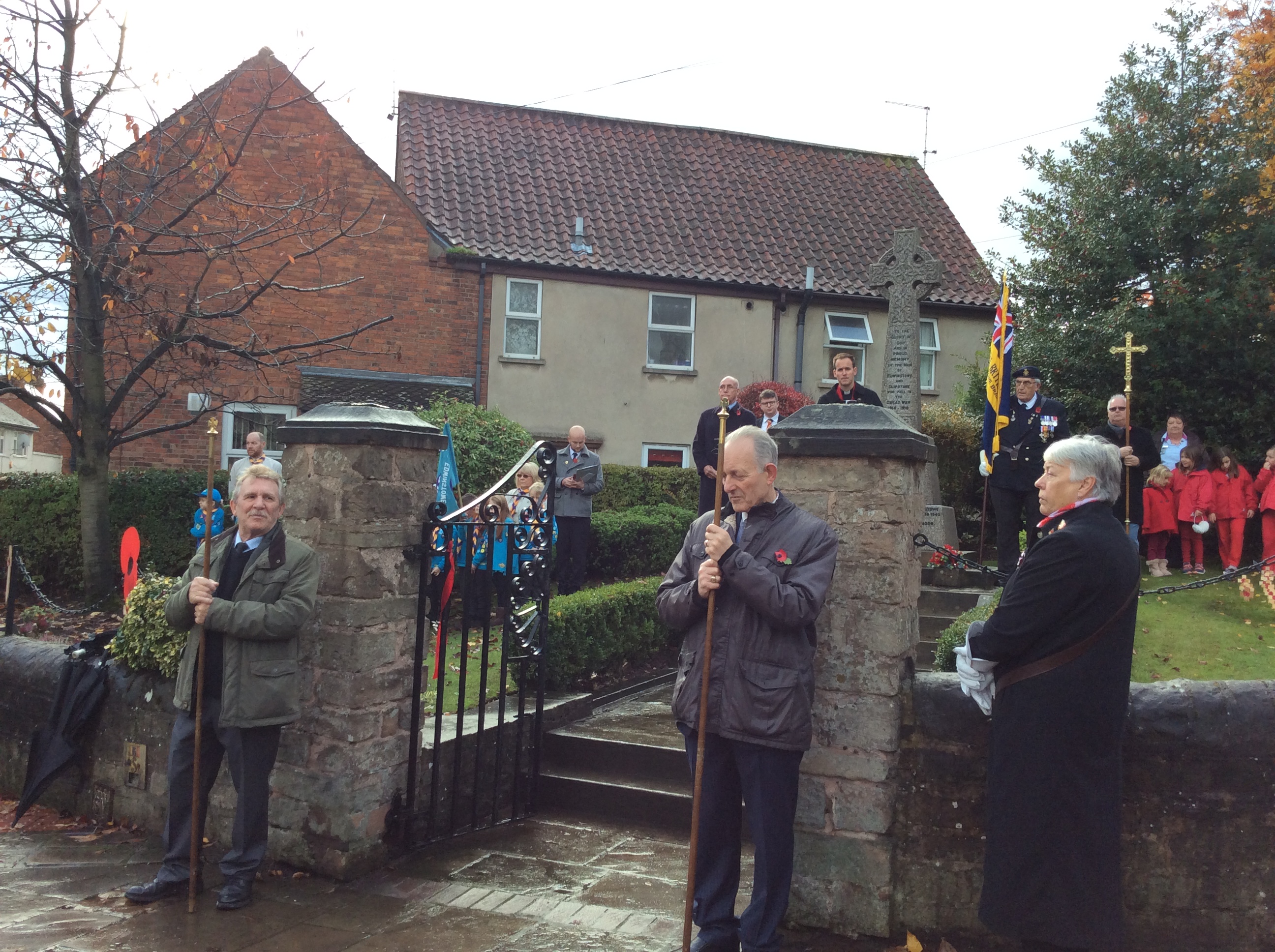
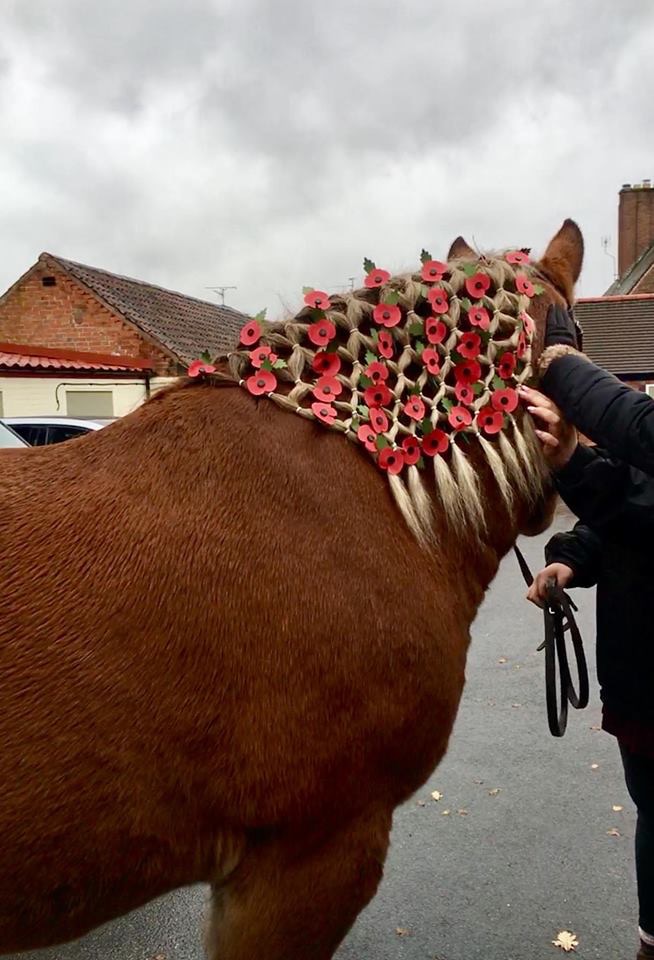
On the 11th hour of the 11th day of the 11th Month of 2018, a ray of sunshine broke through the rain clouds as a crowd of people (with one poppy-bedecked horse) assembled by the War Memorial at Edwinstowe’s crossroads and stood in silence for 2 minutes.  They had listened to the Reverend Ian Webb deliver the Memorial Service, which commenced with the Act of Remembrance and Roll of Honour for the people who gave their lives in two world wars and recent combat.  Edwinstowe mourned 31 men in WW1, 14 in WW2 and 1 in 1999.  The service finished with a blessing.

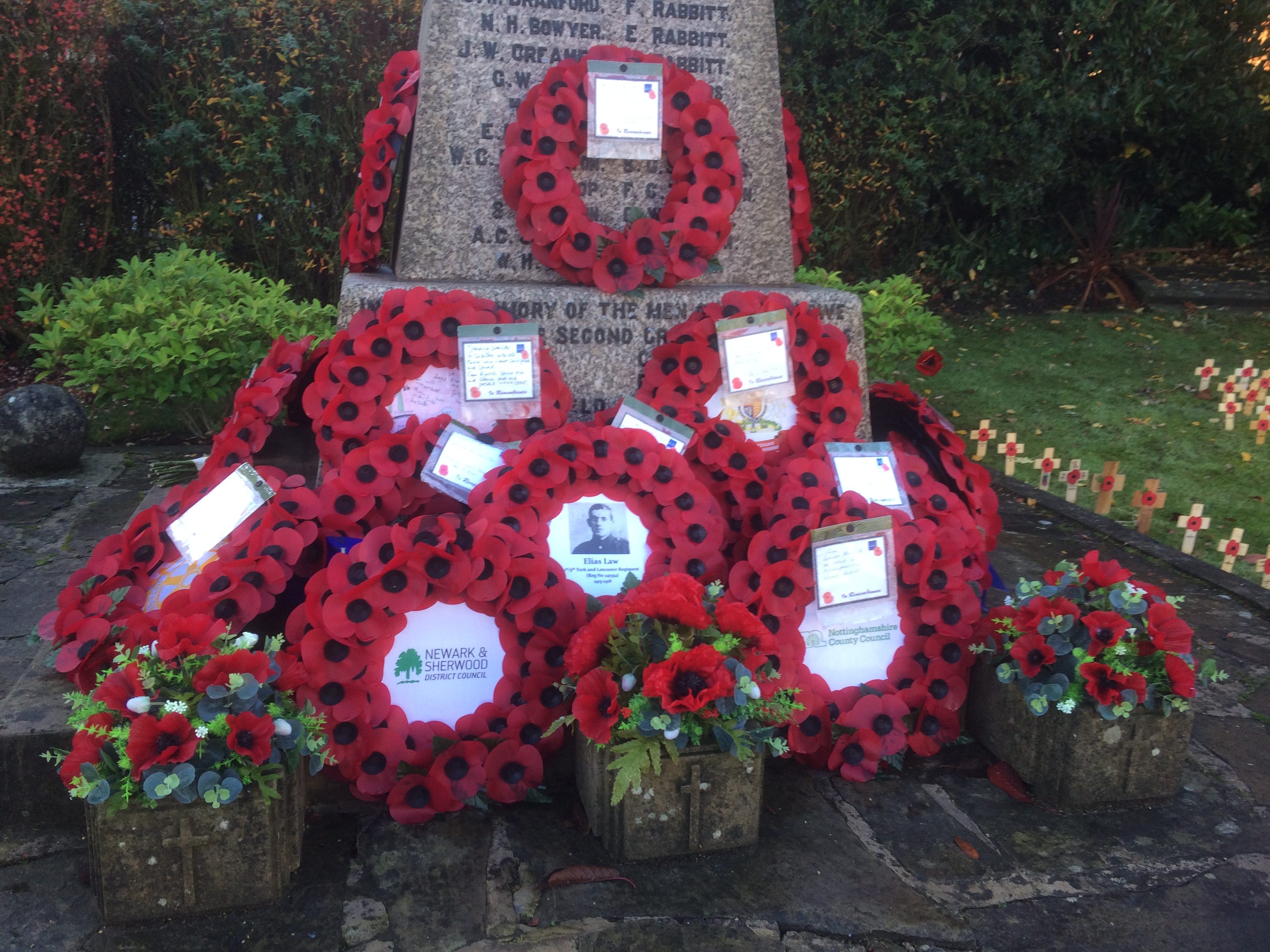
The Wreath-laying then took place with standards lowered.  After the National Anthem the parade led by the Thoresby Band, marched past the saluting base on High Street.  The Saluting Officer was Sir David Naish, DL.  He was accompanied by the Rev Webb and Councillor Celia Brooks, Chairperson of Edwinstowe Parish Council.

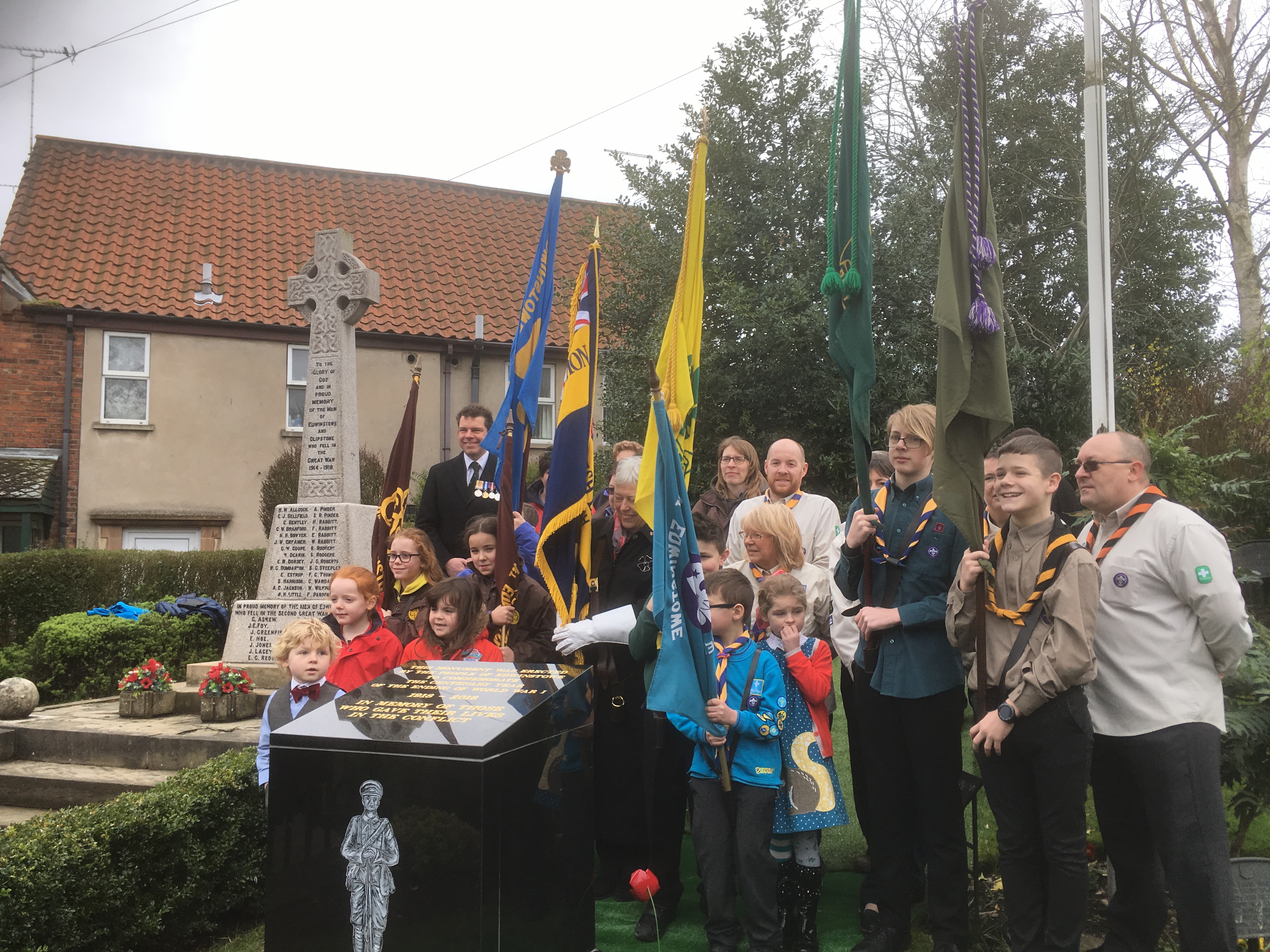
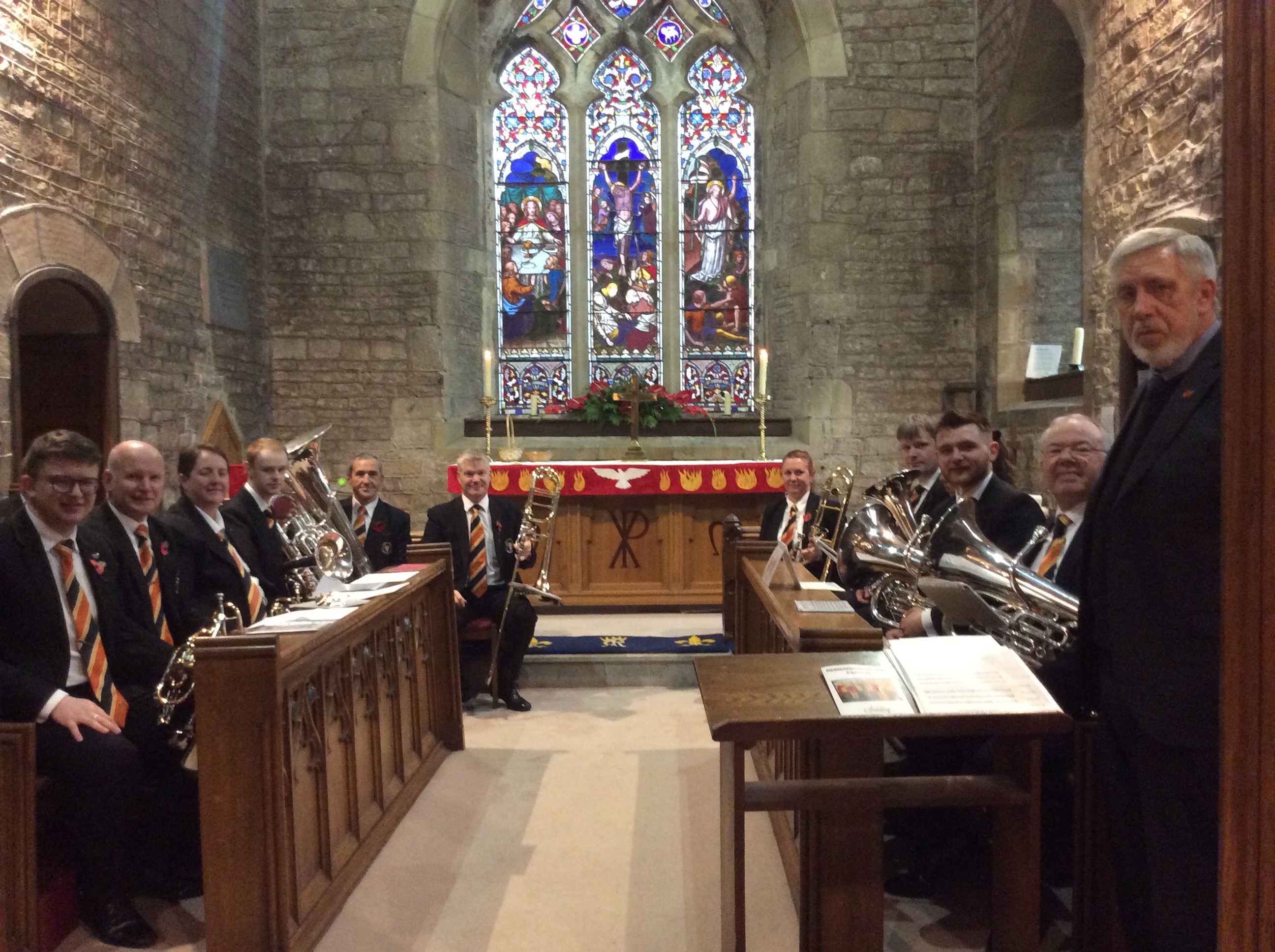
The proceedings commenced earlier in the morning when the Parade, led by CSM Ewan Lees along with the Thoresby Colliery Band,  marched along Mansfield Road arriving at St Mary’s Church in readiness for the 10 a.m. Remembrance Service. The Parade also comprised members of the Royal British Legion, and the Village’s young people’s uniformed organisations, along with a number of individuals who had their own special reason for attending.  These included Scouts, Guides, Brownies and Rainbows – in all over 120 children from the village who have attended this event in increasing numbers over the past four years.

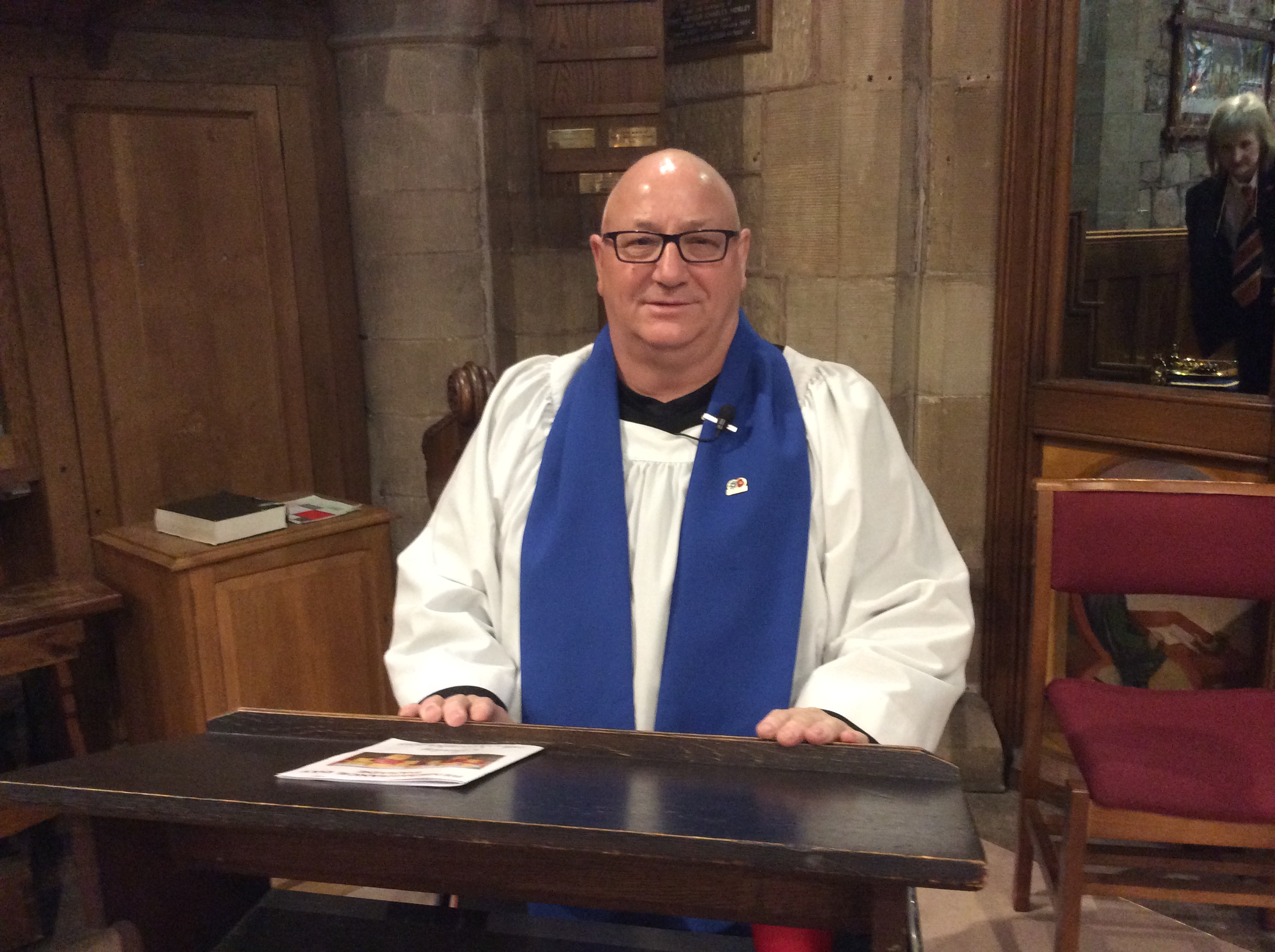
The Remembrance Service was led by Edwinstowe’s new Parish Priest, the Reverend Ian Webb, assisted by Lay Reader Pete Edwards.  There were 5 hymns, 3 poems, with prayerful moments.

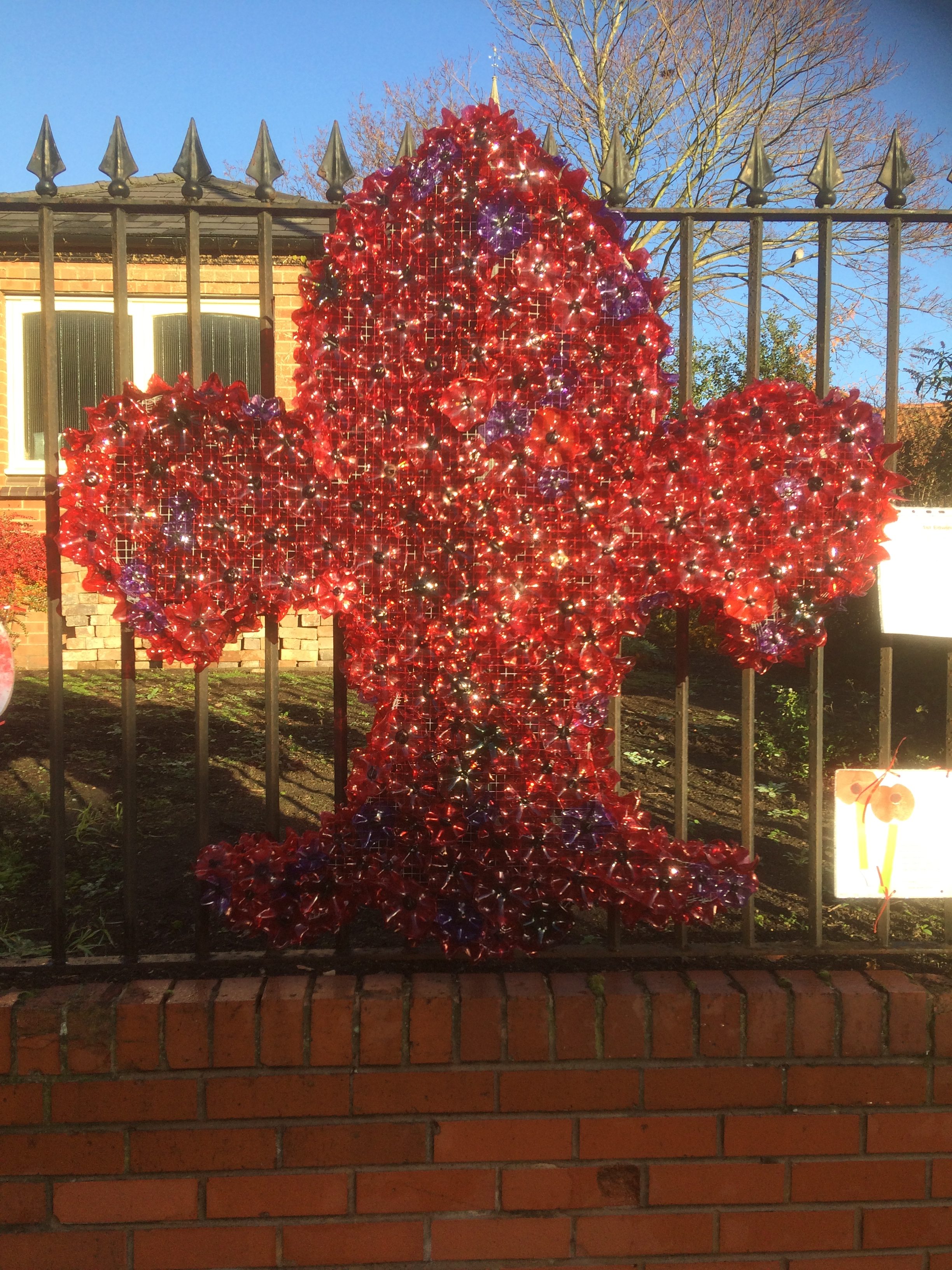
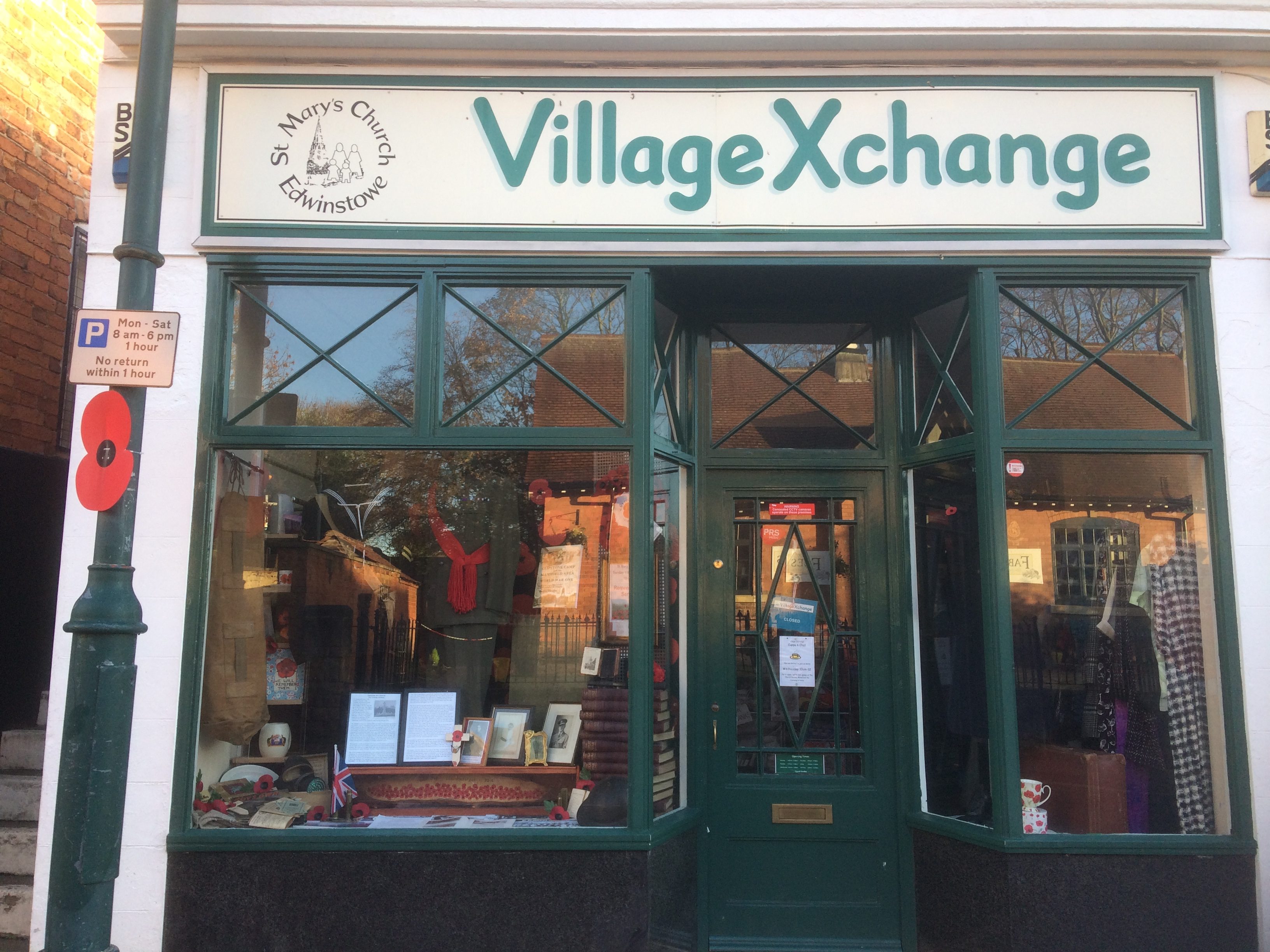
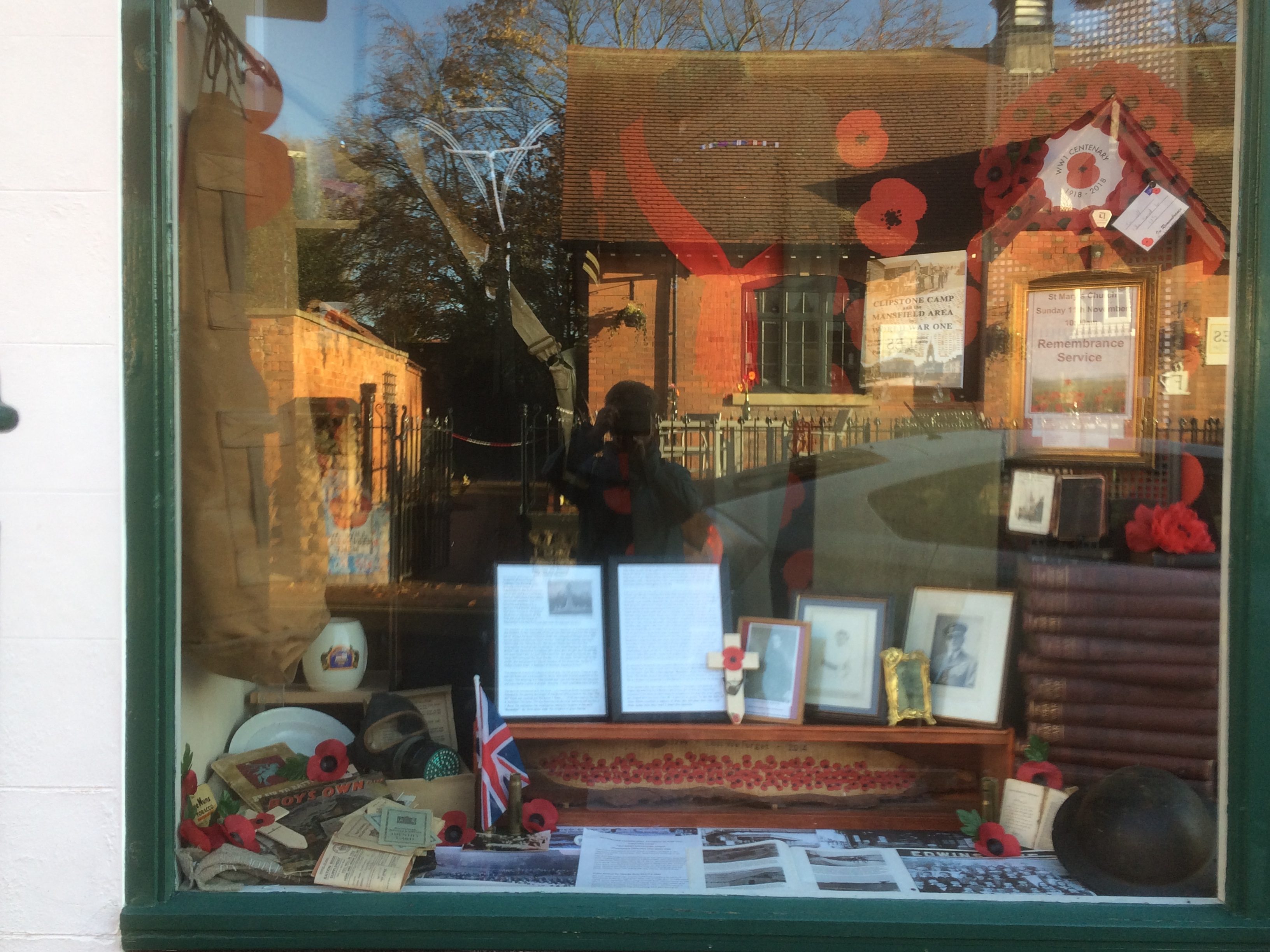
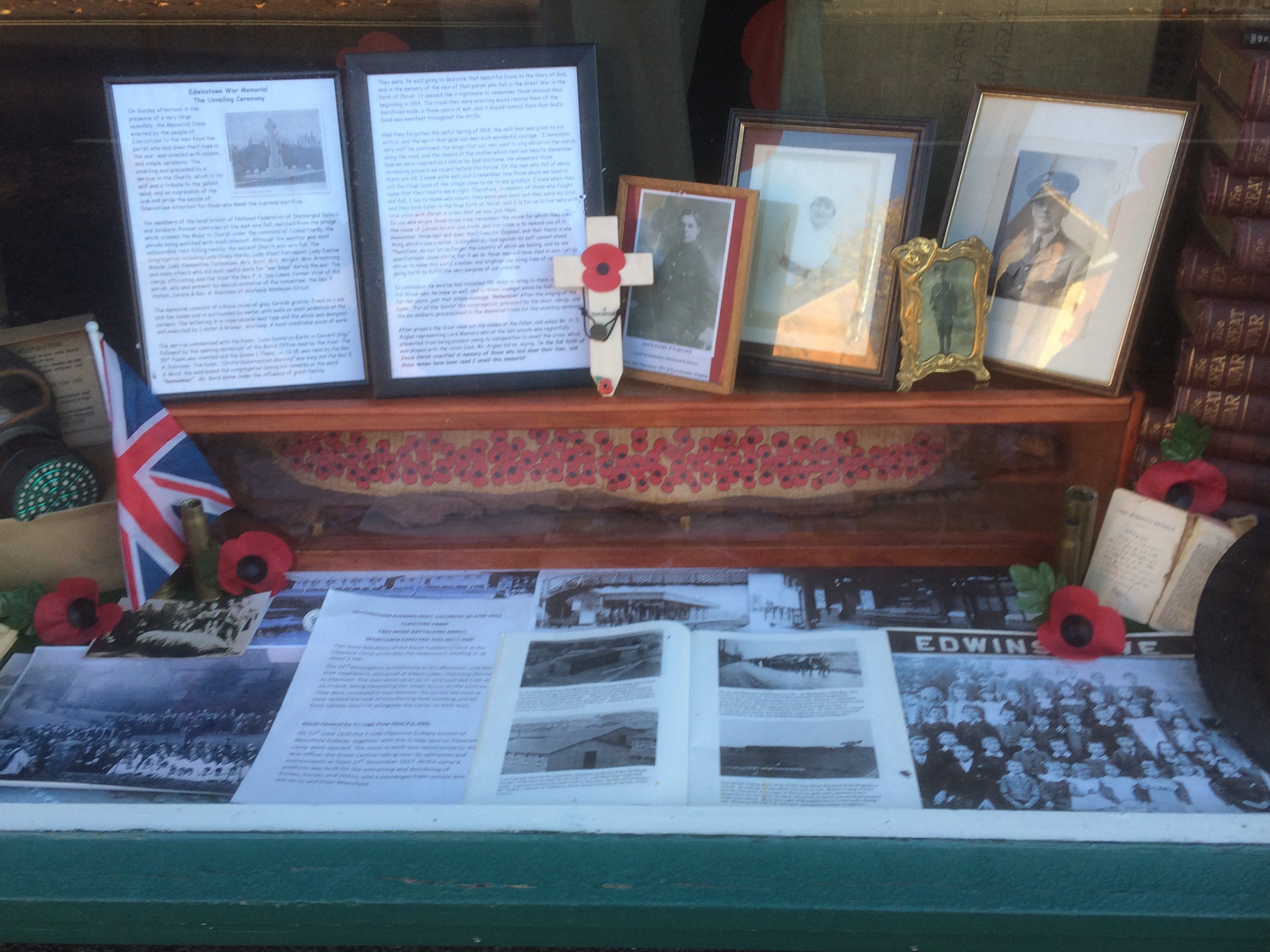
Street lamp posts were adorned with poppies, and the Shops, too, had honoured the occasion with displays of poppies.  On railings outside the Village Hall, a wreath representing the 1st Edwinstowe Beaver Scouts was made up from red poppies (to remember all those that died and are still dying to keep us safe) and purple poppies (to remember animals that died for us  in the first  world war).

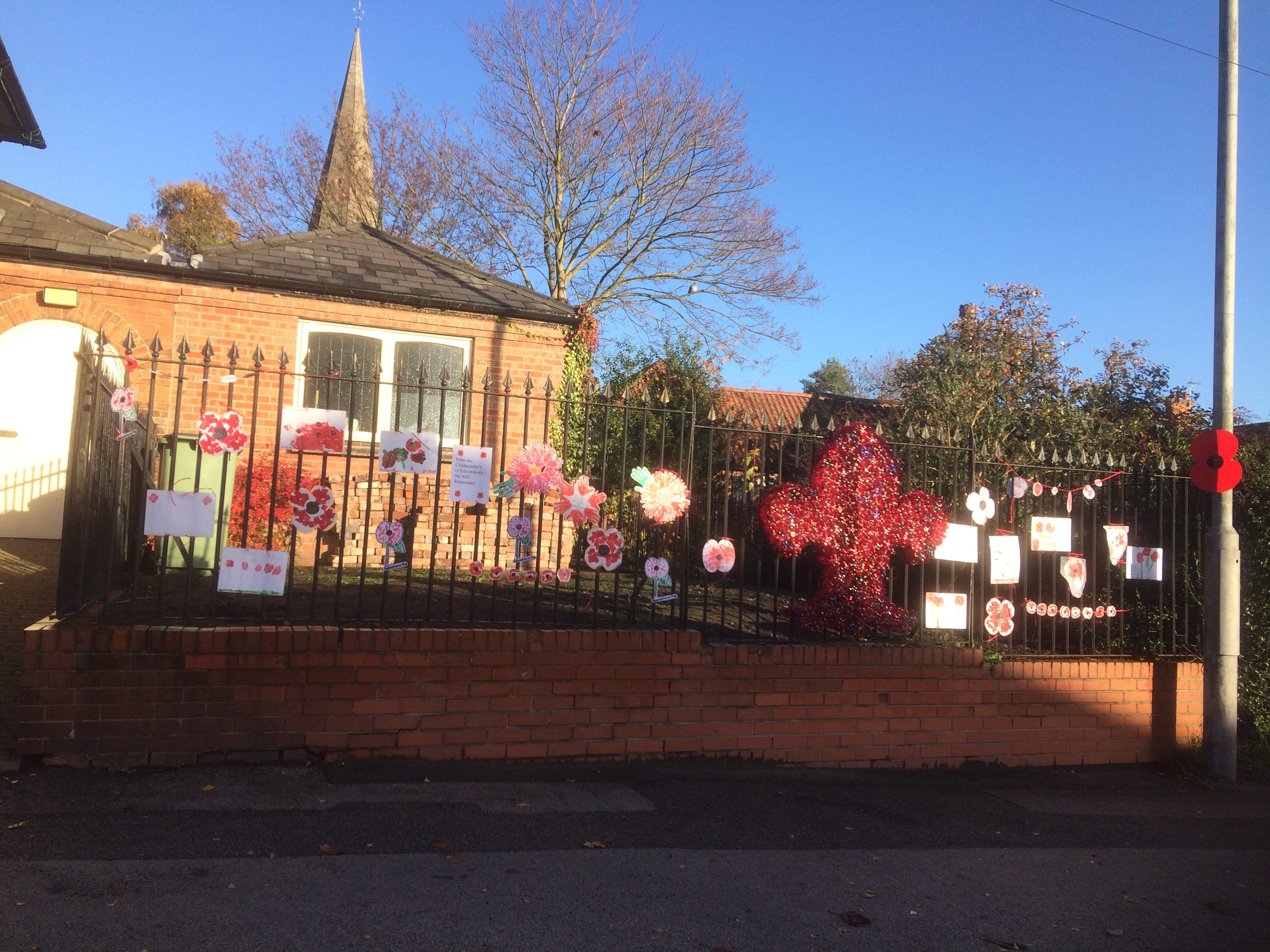
This year, many of the poppies that were taken by residents and visitors over the two weeks leading up to Remembrance Sunday were made by primary school children at King Edwin School.  These children also made several of the poppy motifs that were placed on the school fencing on Fourth Avenue.

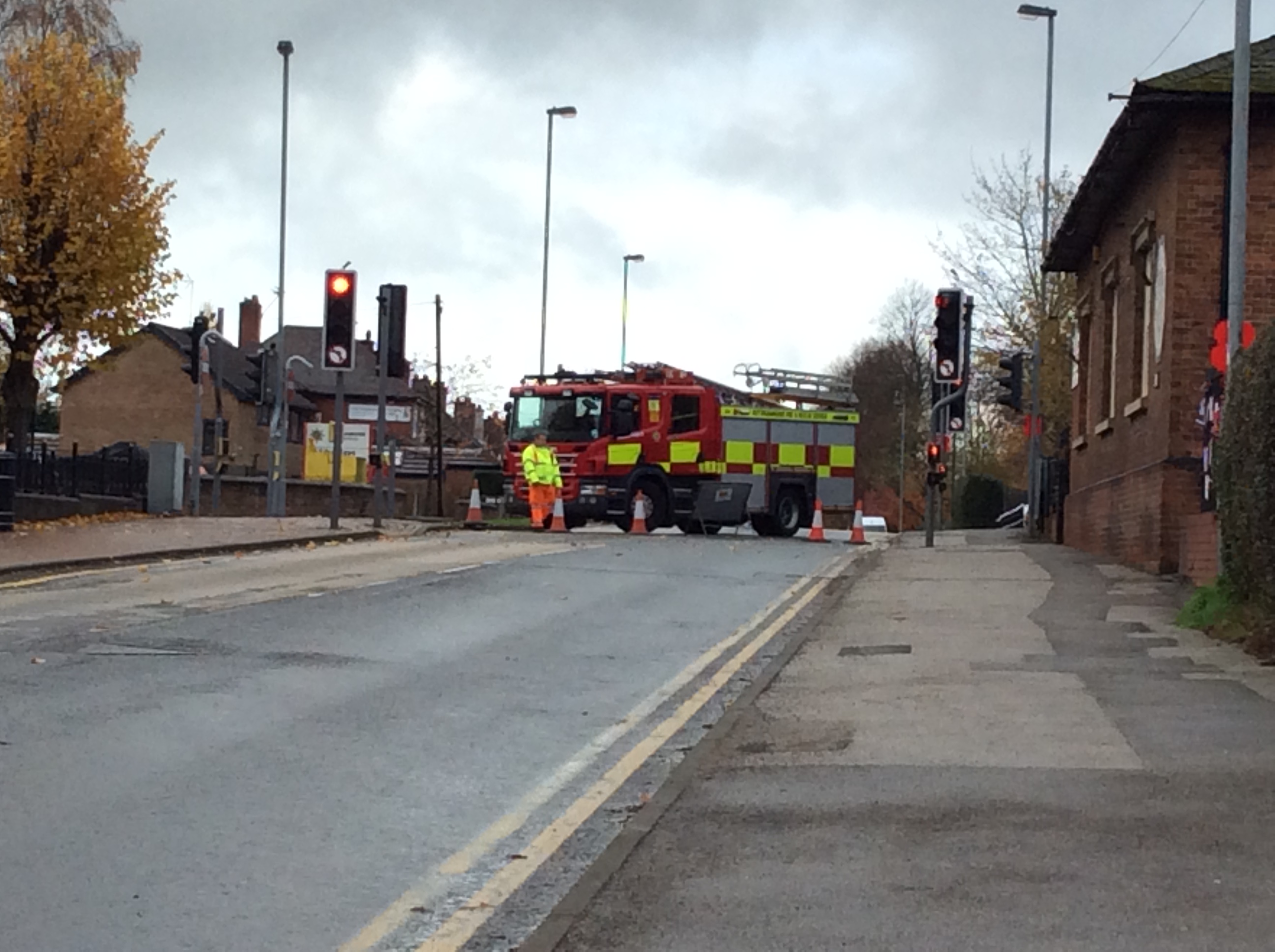
It is estimated that overall, 1,200 residents and visitors attended the Remembrance Service and parade this year, making it a record turnout for this centenary year of remembrance.  Safe road closures and diversions during the service and parade were provided by TMS Retford.