In a recent Newsletter, members of the Edwinstowe Historical Society were informed that a decision had yet to be made about resumption of the monthly meetings, and were assured that as soon as it was safe to meet again, they would be notified.
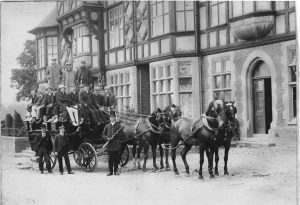
This year Easter falls during April, which it did in 1897 when on the 16th of the month, the Mansfield Chronicle Advertiser reported on the effect of the new railway line from Chesterfield to Lincoln which promised to bring about important changes in Edwinstowe. During the Easter Holidays 4,000 cheap tickets were advertised for use on the systems of the M. S. and L Midland, and the Great Northern Companies. On Bank Holiday Monday, Mr Bird, a Sheffield caterer, would provide luncheon for 2,000 in marquees adjoining the station. Innkeepers took their wagonettes and four-in-hands to meet the train and take tourists round the forest.
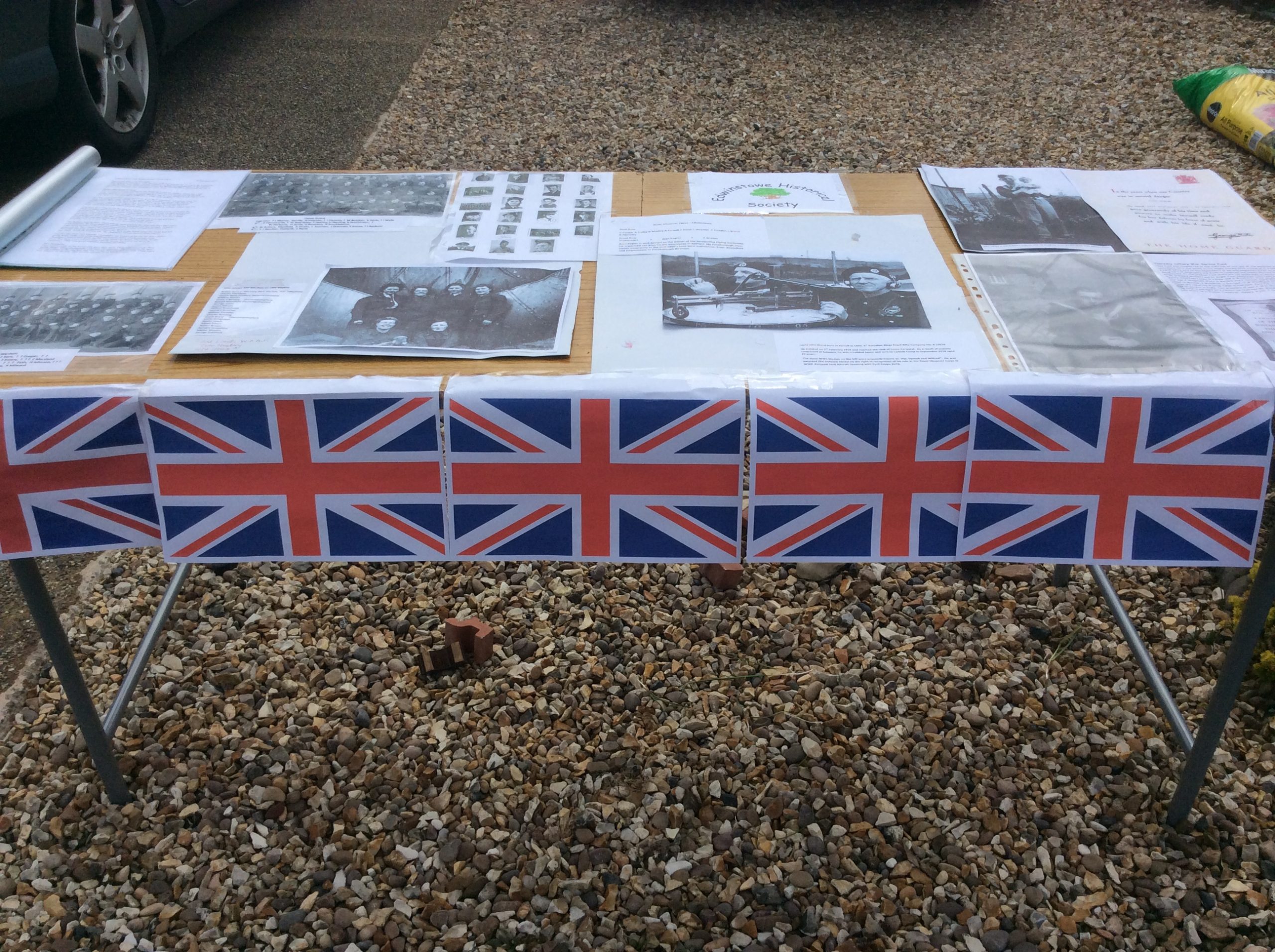
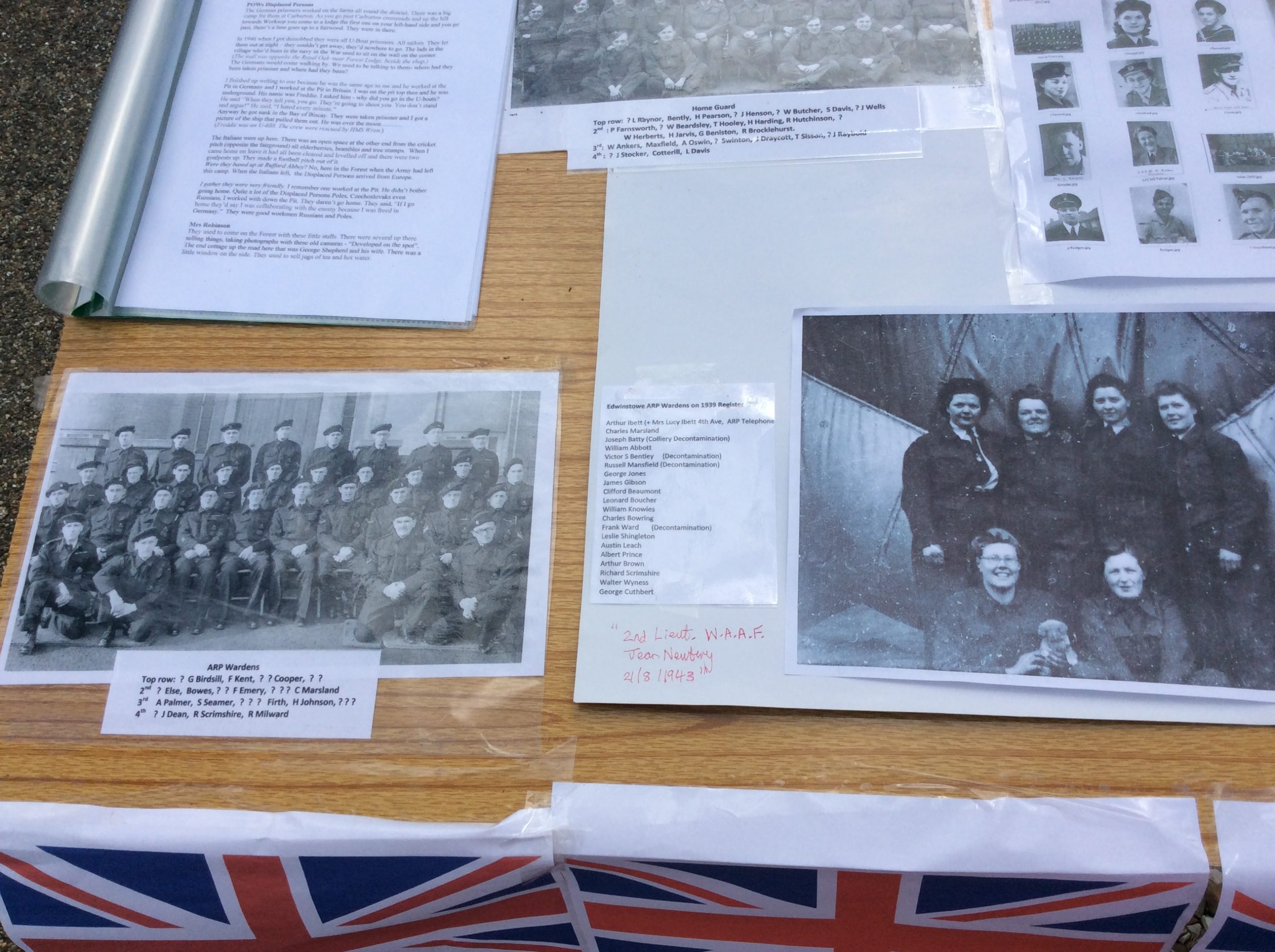
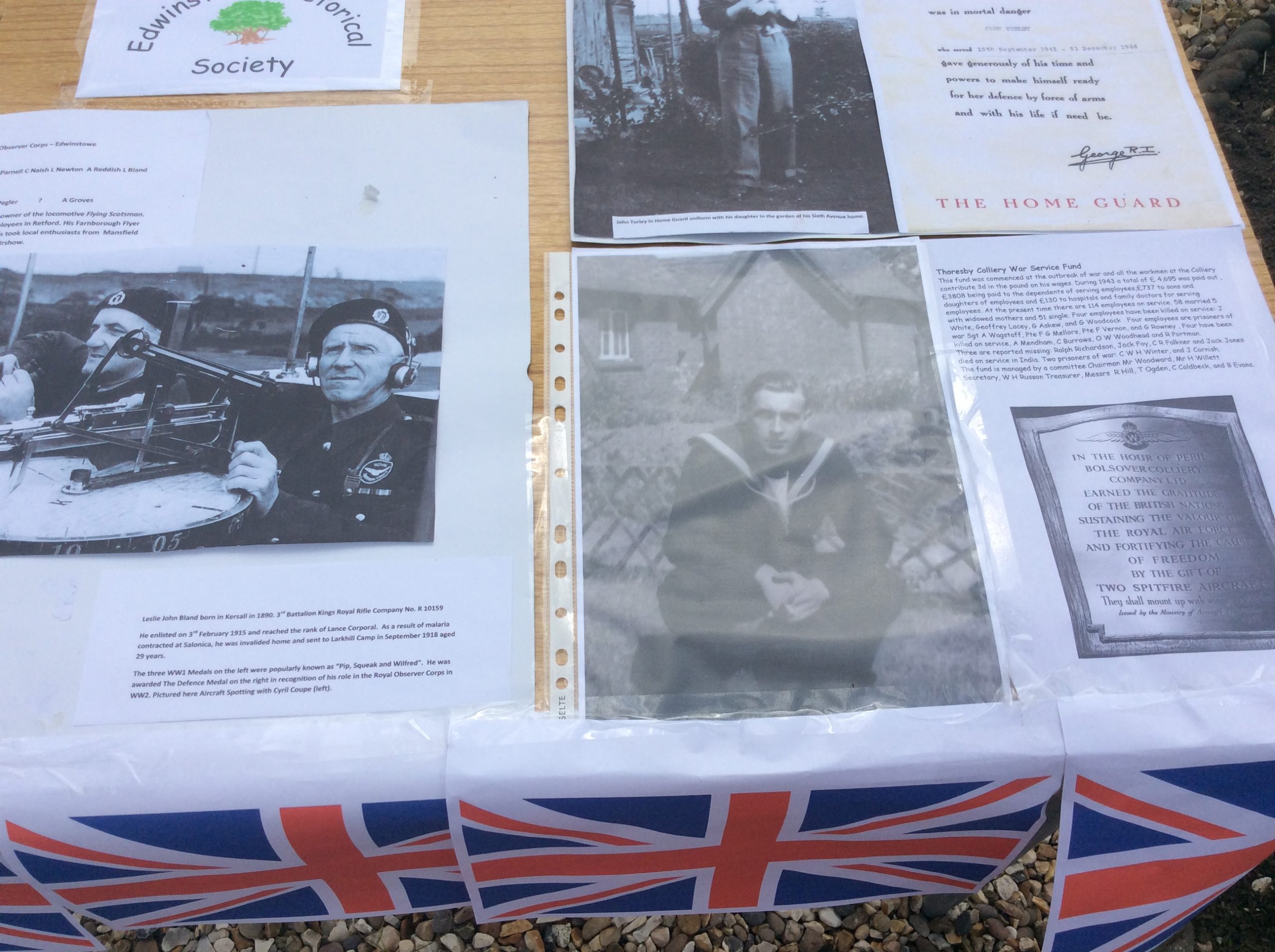
Recent additions to the website include details about the Edwinstowe Male Voice Choir, the Thoresby Colliery Band and the Miners’ Institute. Enquiries continue to be received and answered. One was for information about a relative connected with the railway at Edwinstowe. Another asked about soldiers serving with the South Wales Borderers in the Burma campaign (having seen the website), and details were provided to enable a former resident of Edwinstowe to locate her father’s burial place. Following a request from a local Primary School which hoped to have a WW2 day at the end of term, the Society were able to arrange for some suitable artefacts for display.
This is the time of year when members of the Edwinstowe Historical Society usually enjoy the annual lunch but the advent of the coronavirus necessitated a change of plan. Hopefully a date for the get-together will be arranged in the not too distant future. A decision has yet to be made regarding the resumption of the monthly meetings. The December newsletter was circulated to all members providing up to date information about the recent additions to the website.
 The joy of being able to get out and about in the fresh air is good for health, and gardening is one way of achieving that. Allotment gardening in Edwinstowe goes back to the late 1800’s then known as the Cottage Garden and Horticultural Society for Edwinstowe, Ollerton and the neighbourhood. There were several allotment sites in the village, but only the Ollerton road site remains, founded in 1918 by the Edwinstowe Allotment and Leisure Gardening Association. Further information about the Gardening Association is available on our page.

The Society have agreed to support the Sherwood Forest Trust with their forthcoming project to plant heritage trees for Sherwood Forest parishes, with the intention to plant a Hawthorne tree (traditionally the May flower) in Edwinstowe. The Society will provide an exhibition about Edwinstowe’s former Rose Queen festivals.
What is the connection between Edwinstowe and the Christmas carol “Once in Royal David’s City”? The words were written as a poem by Mrs C. F. Alexander and later became a Christmas carol with music composed by organist Henry John Gauntlett. Mrs Alexander’s husband, William, Bishop of Derry, was a cousin of James Fane Alexander of Edwinstowe Hall. Mrs Alexander also wrote the hymns “All Things Bright and Beautiful” and “There is a Green Hill”
The advent of the Corona virus and its devastating effects will remain for many years, and the fact that some schools were closed and pupils sent home brings to mind an event which took place in Edwinstowe during 1901-2, as recorded in the Village School’s Log Books.
On 7th July, 1901, the Headmaster, Mr William Curtis, recorded that the scarlet fever was spreading very fast and attendance was falling off considerably.
Then on 12th July a notice was received from the Medical Officer ordering the closure of the school until further notice. After reopening on 30th September, the school was closed immediately when the fever reappeared with renewed vigour.
On 1st January 1902 the school reopened with a good attendance. Mr Curtis noted that six pupils had died and several were still in hospital, and that scarcely a house had not been affected.
On 6th February the school was again closed by order of the Medical Officer of Health, but on 1st Apr was reopened for another trial. The fever still existed in 2 houses but the Medical Officer kept close watch to prevent any intercourse with other families. Mr Curtis commented that “in spite of the fearful outbreak of fever which has spread in this village, the people as a rule are just as incautious as ever. “

The ups and downs experienced by some members of the Edwinstowe Historical Society
during the Lockdown period have been recorded and placed on the Society’s website.
These ranged from toothache and cancelled holidays, to gardening, baking, knitting and
zoom meetings. Participation in the weekly gatherings to recognise the work of the NHS,
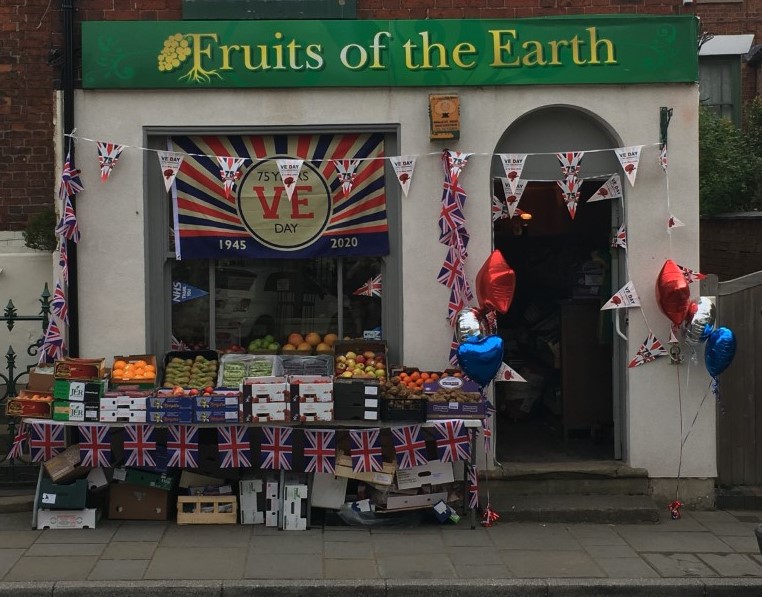
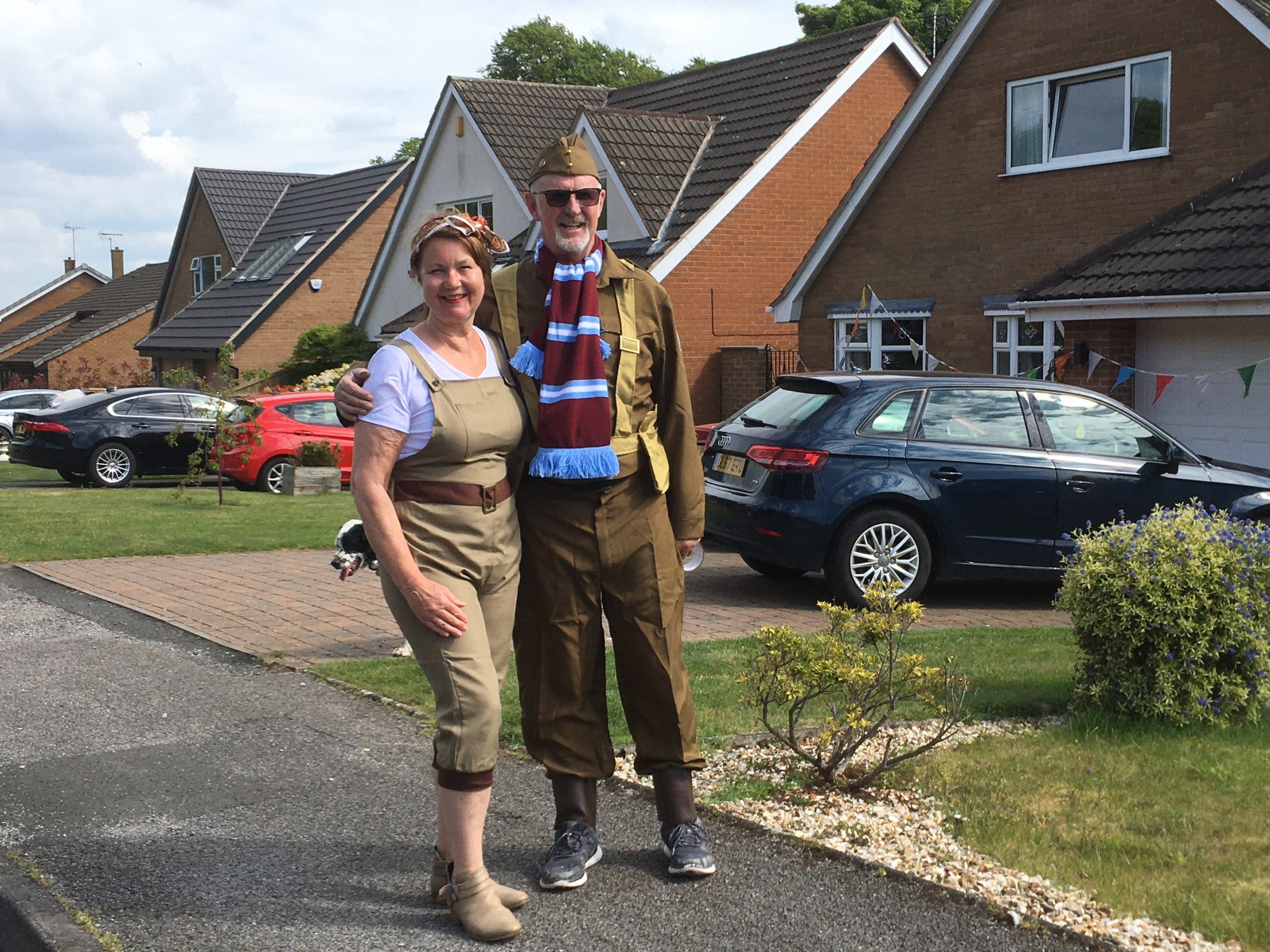
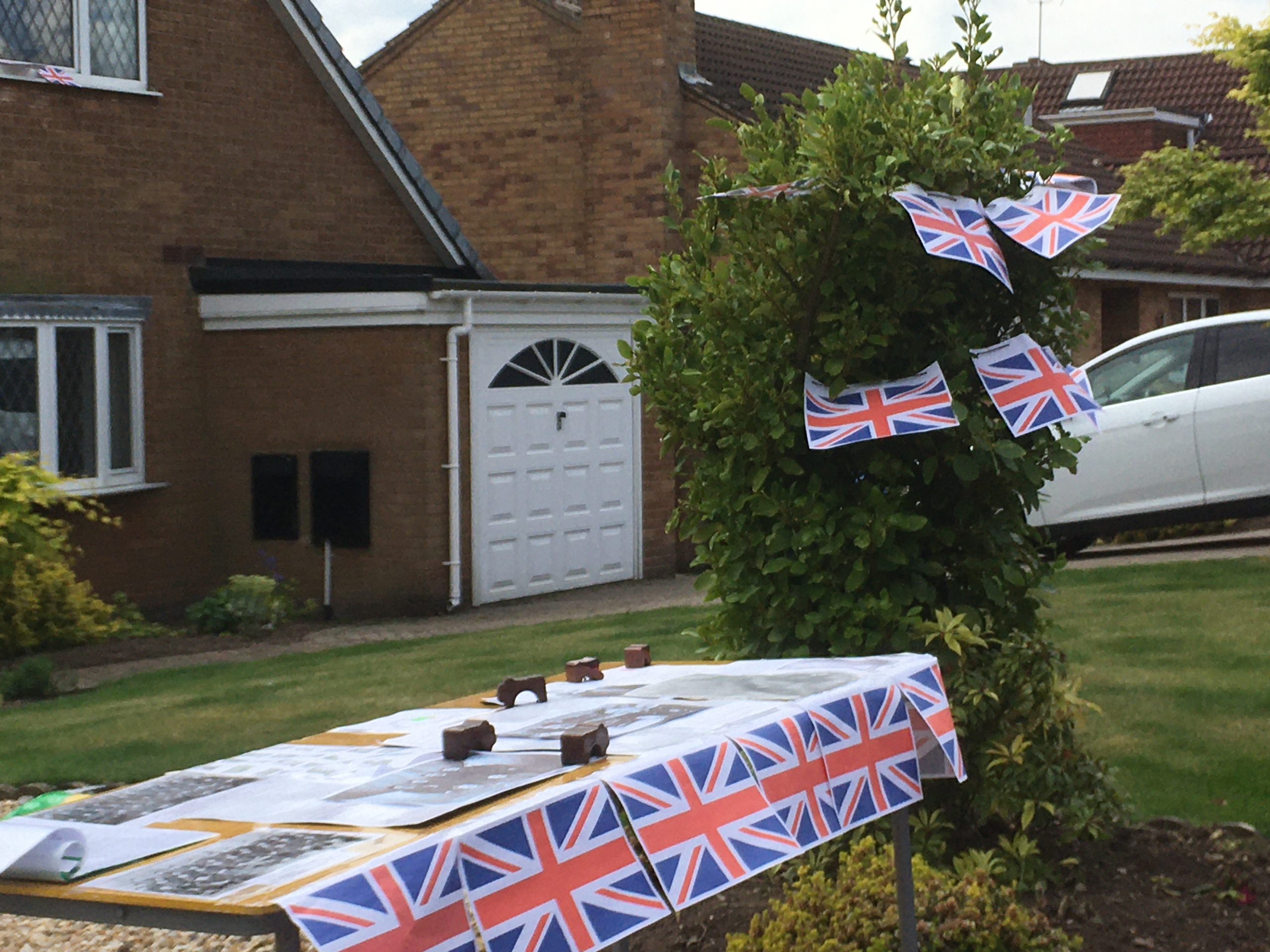
and other essential workers, together with the celebrations for the 75th anniversary of VE
Day on 8th May, helped to dispel the isolation felt by some and strengthened the community
spirit – all keeping their distance from one another, of course.
A recent addition to the Society’s website related to bachelor, John Truman, Master
Shoemaker, who, according to the 1851 Census lived in Truman’s Yard, Town Street,
Edwinstowe (present day High Street), He was a well-respected entomologist, who bred and
sold specimens of rare butterflies and moths from Sherwood Forest to collections including
the British Museum.
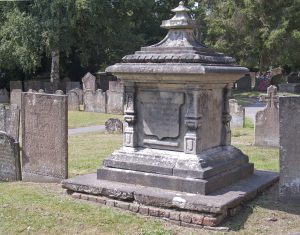
John Truman died in a road accident on his 51st birthday, on 3rd May, 1853. A splendid
monument, close to the east end of St Mary’s Church, was erected in his memory, and his
burial was paid for by public subscription.
Another notable Edwinstowe family is that of Tudsbury, for which the Society’s researchers
continue to collect information to be added to the website in due course.
A Newsletter has been circulated to all members of the Edwinstowe Historical Society informing them that the Committee still believe it is wiser to wait until next year before consideration is given to holding meetings again. In view of the fact that the AGM was not held in May, the Chair, Shirley Moore, decided to include her report for 2019/20 in the Newsletter.
Edwinstowe Historical Society is looking for pictures of Ashgrove House (Queen Anne/Regency) on West Lane, Edwinstowe and which was demolished in the 1960’s to make way for the new Vicarage.
In the 1841 Census Mrs Dracott and her daughter ran a Girls’ School in the house (on what was then called Dog Kennel Lane or Back Lane West).
In the 1930’s Dr Rogerson held his surgery at the house, and then in 1947 Dr Gray moved into the Vicarage on Mansfield Road having exchanged Ashgrove House with the Rev Basil Evans. The Society would welcome any photos or memories of this building.
Although a small village, Edwinstowe has been home to many notable residents: Cecil Day-Lewis, author and Poet Laureate; Dr E Cobham Brewer, author of a Dictionary of Phrase & Fable; Geoffrey Palmer, author and teacher; Elizabeth Sarah Villa Real Gooch, actress and author; Lady Sibell Argles, née Pierrepont, involved with the community; Lady Eveline Maude, involved with local activities; Philip Brett, conductor and musicologist; Henry James Perrenee, Bow Street Runner; and Christopher Thomson, strolling player and artist.
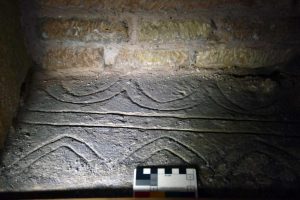
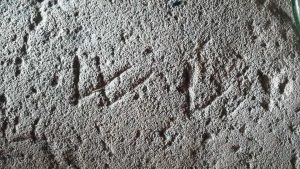 During the past few weeks additions have been made to the Edwinstowe Historical Society’s website and include reference to the medieval graffiti uncovered in the church.
In 2018 St Mary’s church was chosen to be included in the Derbyshire and Nottinghamshire Medieval Graffiti Survey. A summary of the findings indicated that as Edwinstowe church had been restored in Victorian times, the rendered plaster having been stripped off, the interior walls were now bare stone which made the survival of graffiti very sparce and faint. Some 25 pieces were identified and recorded on the interior and exterior of the church.
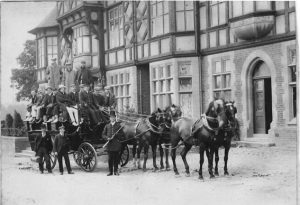
Currently the Society’s archivists are researching tourism in the village. People have been visiting Sherwood Forest/the Dukeries/Edwinstowe for many years. In the 19th century people began to appreciate the natural beauty and splendour of the forest, with writers, poets and artists gaining inspiration from the surroundings. The opening of the train station in Worksop in 1849 and the station in Edwinstowe in 1896 enabled large numbers of visitors to come to the area and, after being met at the stations, travelled through the forest roads in horse-drawn brakes and charabancs. They would then stop for refreshments in the village.
In the 20th century visitors continued to arrive, not necessarily by train but in coaches or their own transport. In 1976 the Visitor Centre opened, but the decision was taken to demolish the buildings in 2018 and for a new Visitor Centre to be built on a site near to the cricket field. In 1984 the first annual Robin Hood Festival took place attracting approximately 40,000 visitors during the week, and continues to be held annually (unless unforeseen circumstances prevail).
To mark the occasion of the 75th anniversary of VJ Day, 15th August 1945, the names of 3 local residents who fought in the Burma campaign were added to the Edwinstowe Historical Society website.
 An enquiry has been received relating to a monument known as the Forest Pillar, situated alongside the A616 between Ollerton and Budby. Sadly, the top of the pillar and the plaque have both disappeared, but it is anticipated that future investigation will yield results. Perhaps there is a reader, or readers, of the magazine who could provide any information. If so, please do not hesitate to contact the Society on EdwinstoweHistorySoc@gmail.com .
Recently a gentleman from New Zealand visited the village and enquired about two families associated with Edwinstowe. These were the Rabbitt and Robinson families, to whom he was related. His contact with a member of the Historical Society provided him with information about the two families, which are mentioned on the Society’s website.
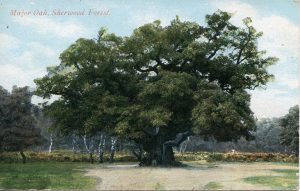
Many people will have seen one of the old photographs of the Major Oak depicting the village blacksmiths, complete with bellows, carrying out repairs to the tree. After all this time one could be forgiven for thinking the bellows had been scrapped. However, this is not the case, because the set of bellows was recently located, having been adapted for use as a table.
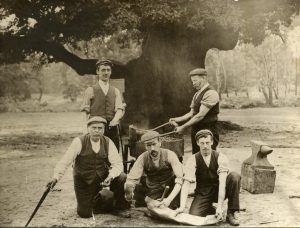
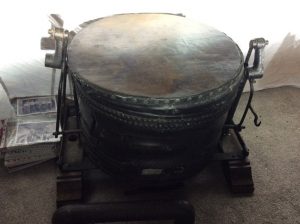
Blacksmiths at the Major Oak and the bellows
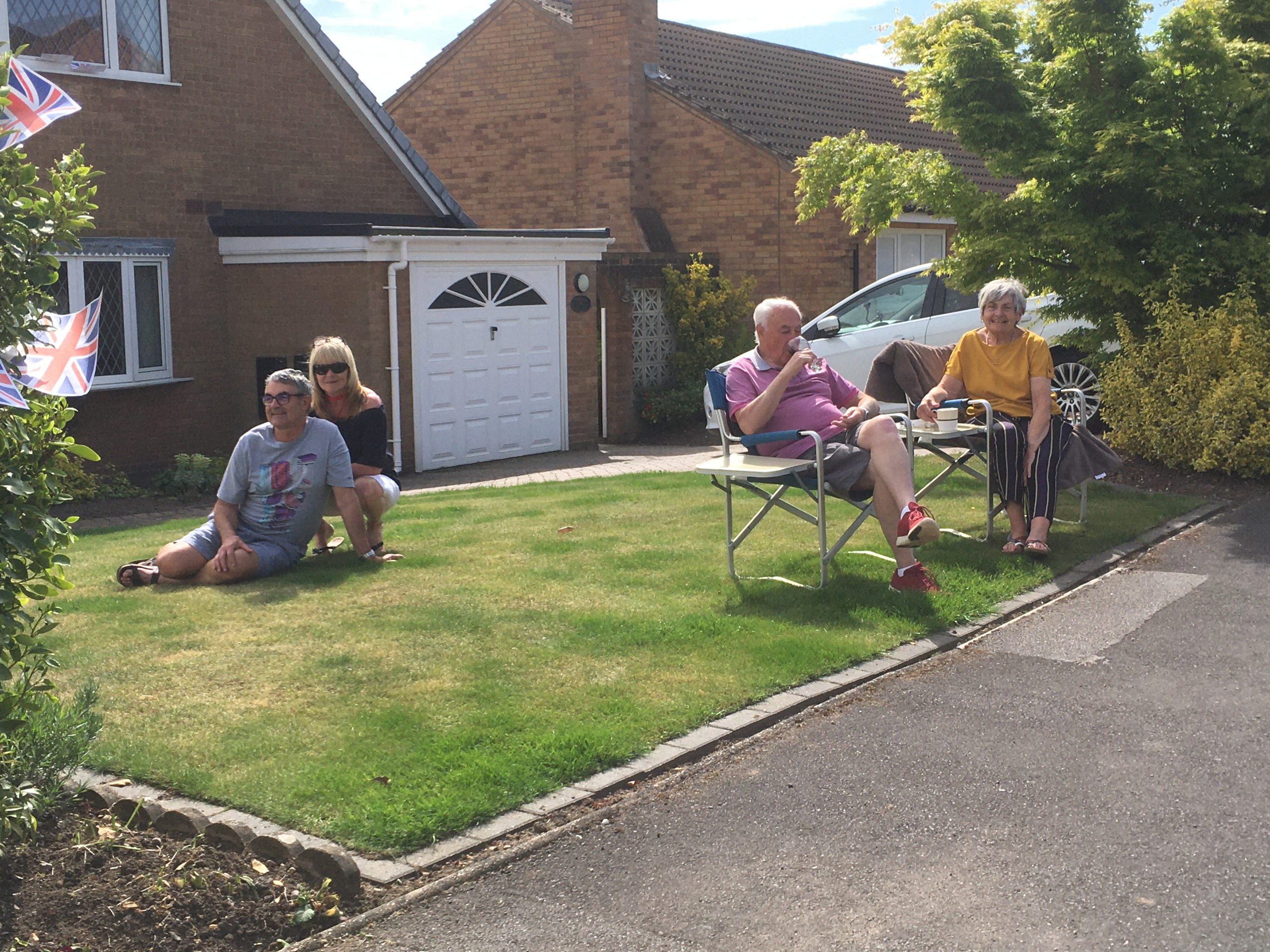
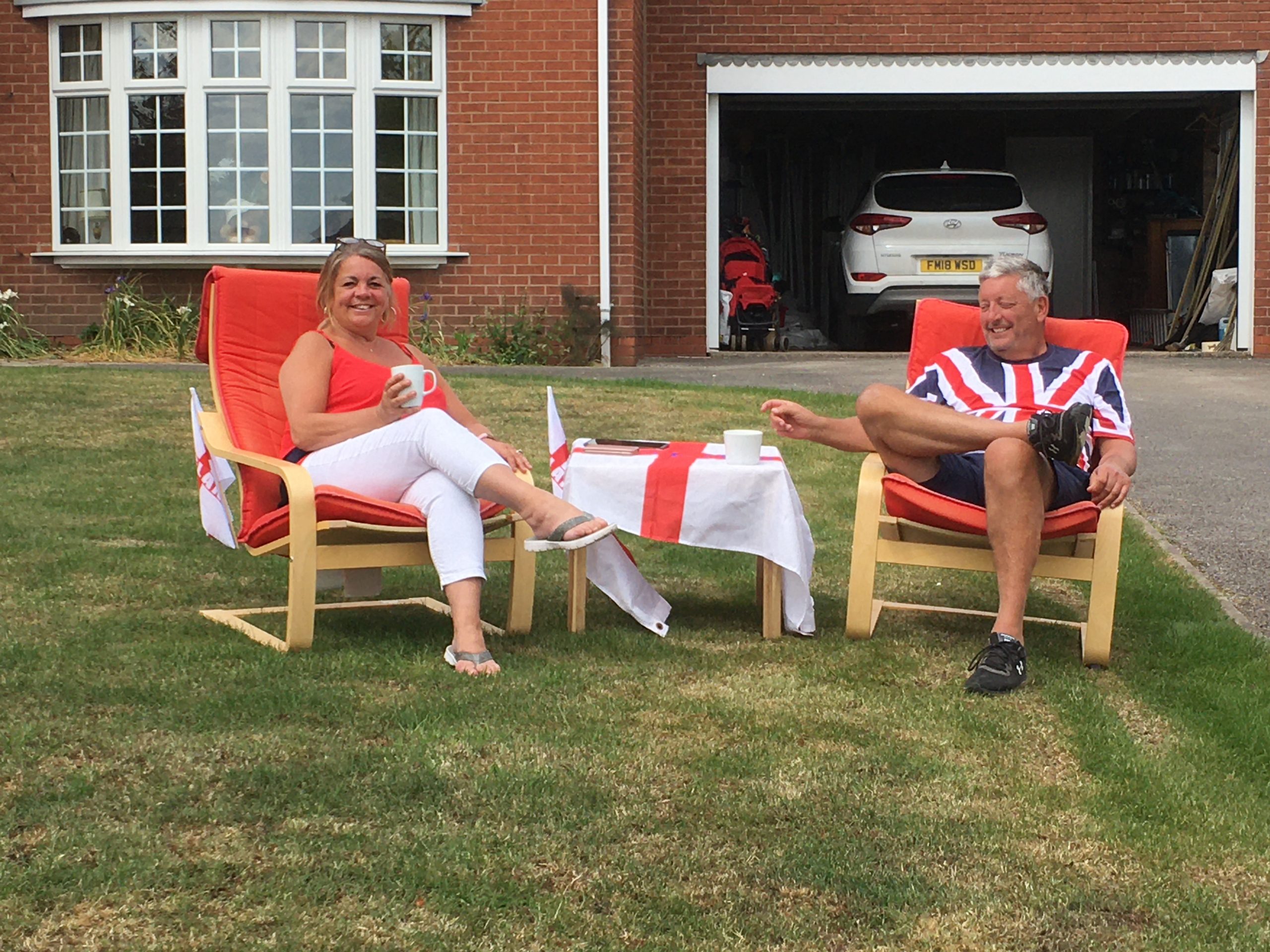
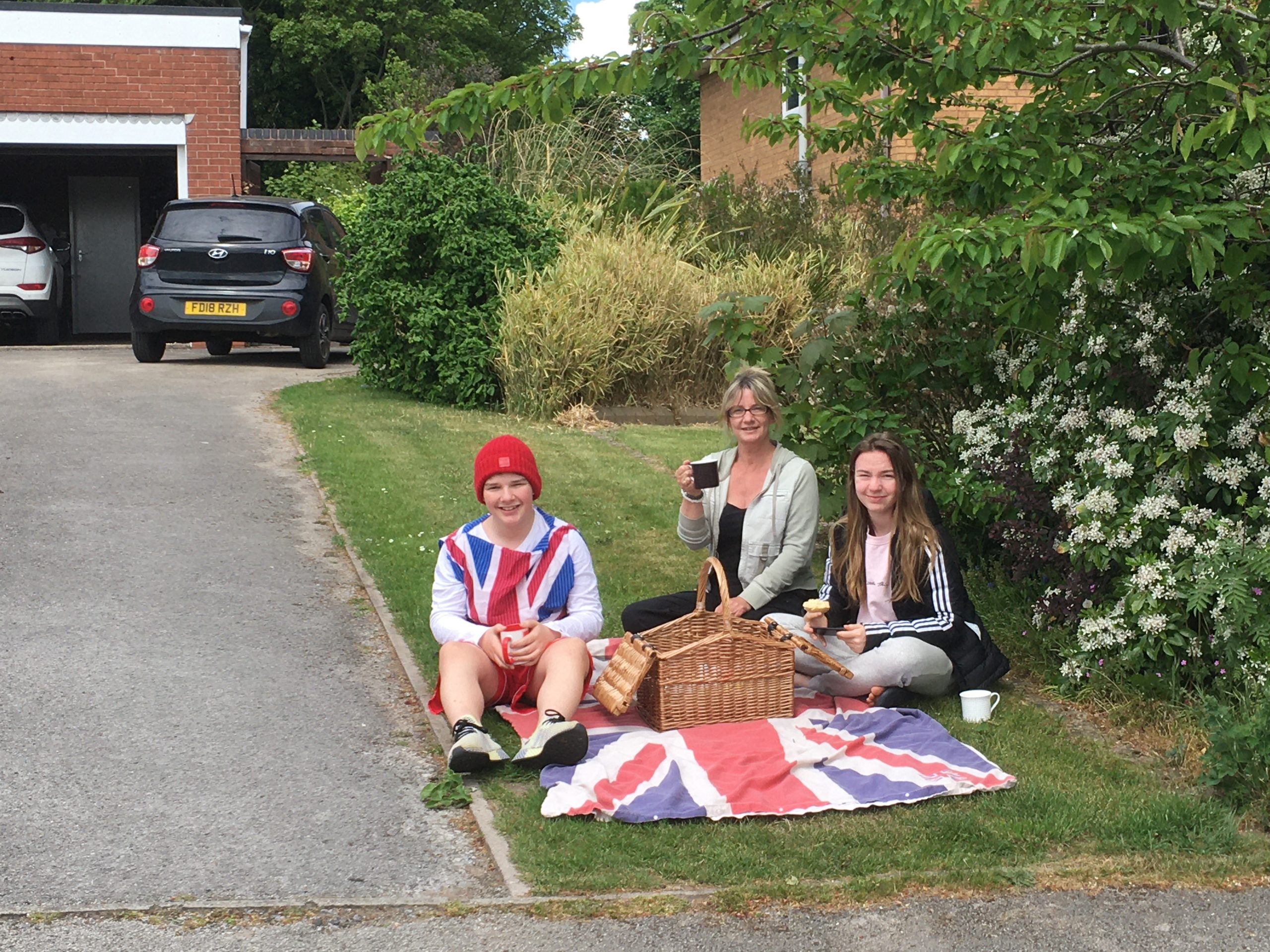
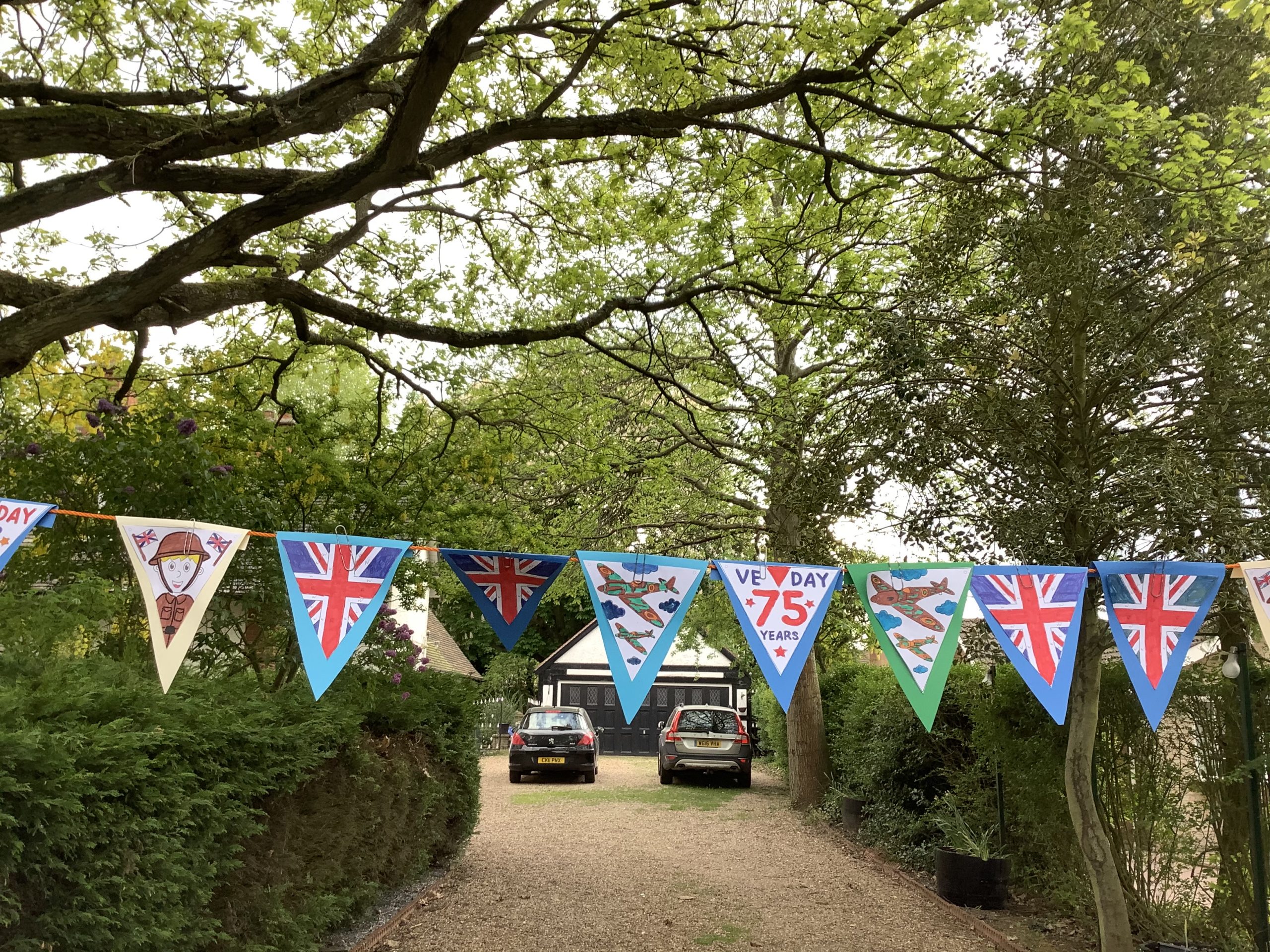
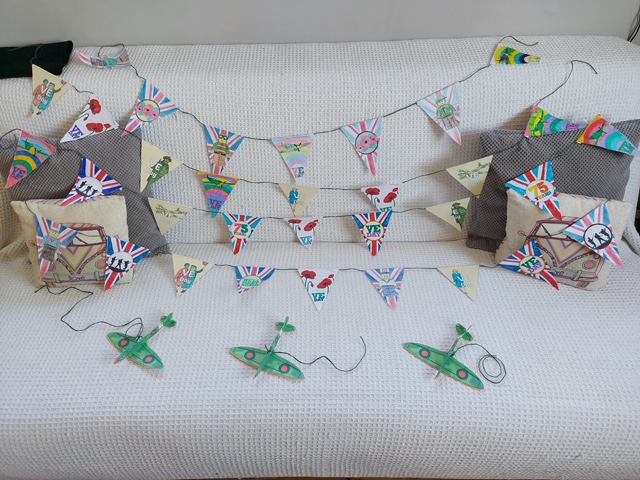
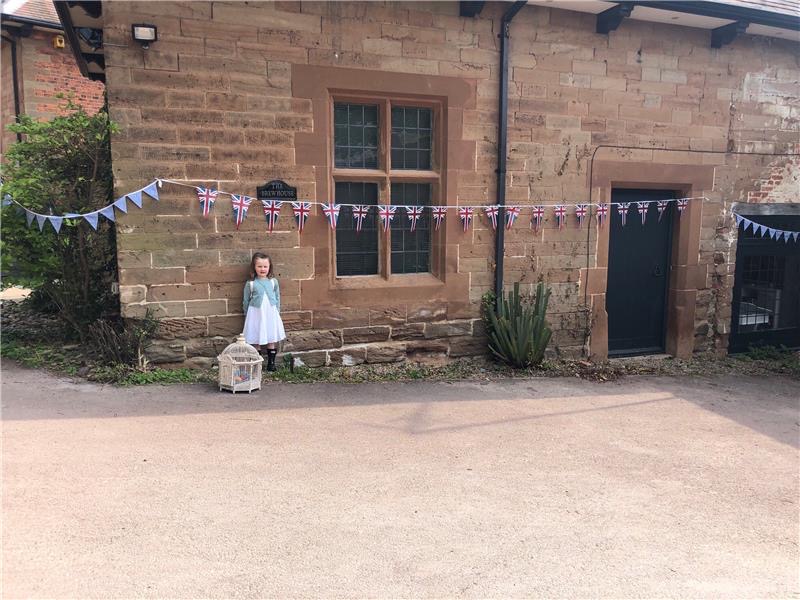
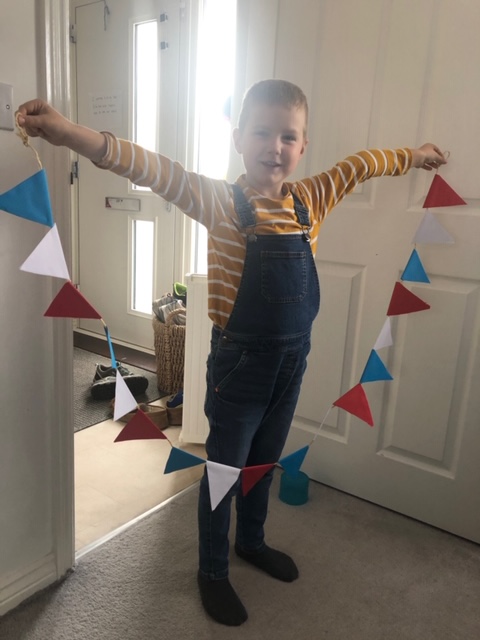
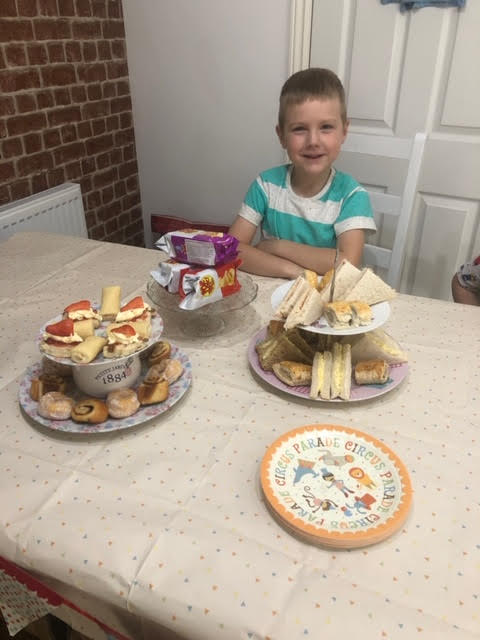
Memories from 75 years ago 1945.
Edwinstowe VE Day May 1945
People came out into the street at midnight, and there was live bugle and drum music. Hundreds went to a military camp for a singsong in the Sergeant’s Mess. A camp-fire was lit and fireworks were let off. The following afternoon a tea for the children of Sixth Avenue was held in the school hall. Yesterday Fourth and Fifth Avenue were to have their turn. Social evenings were also held.
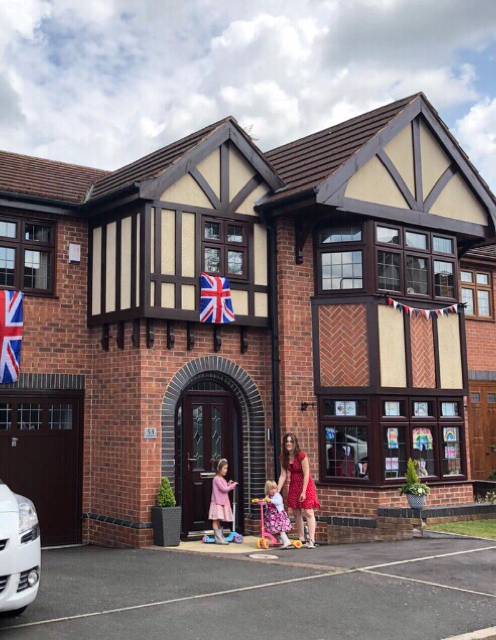
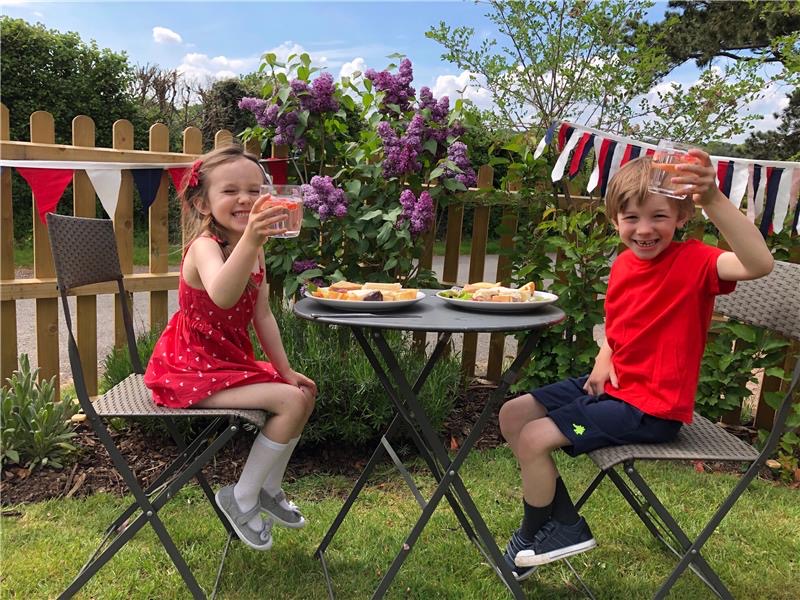
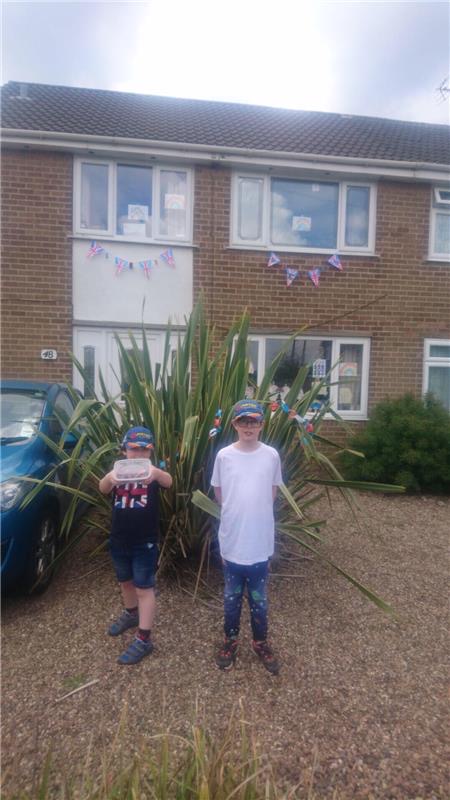
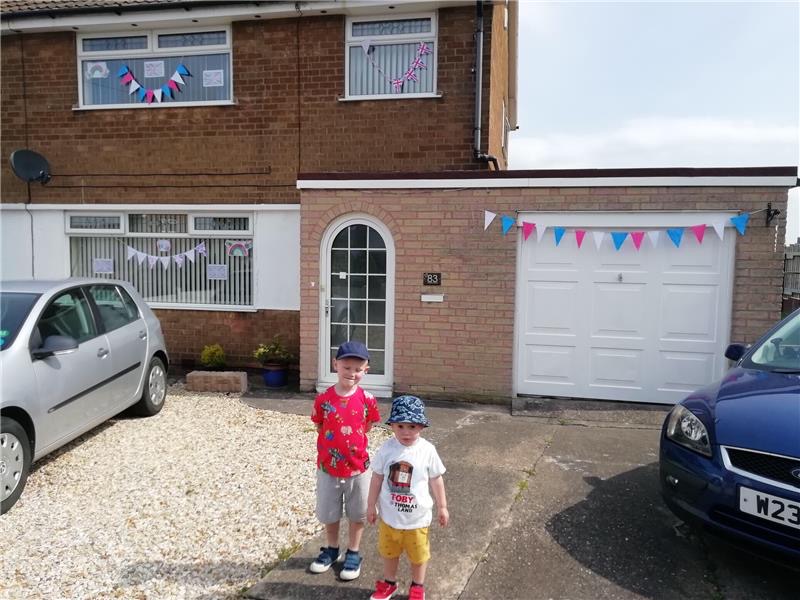
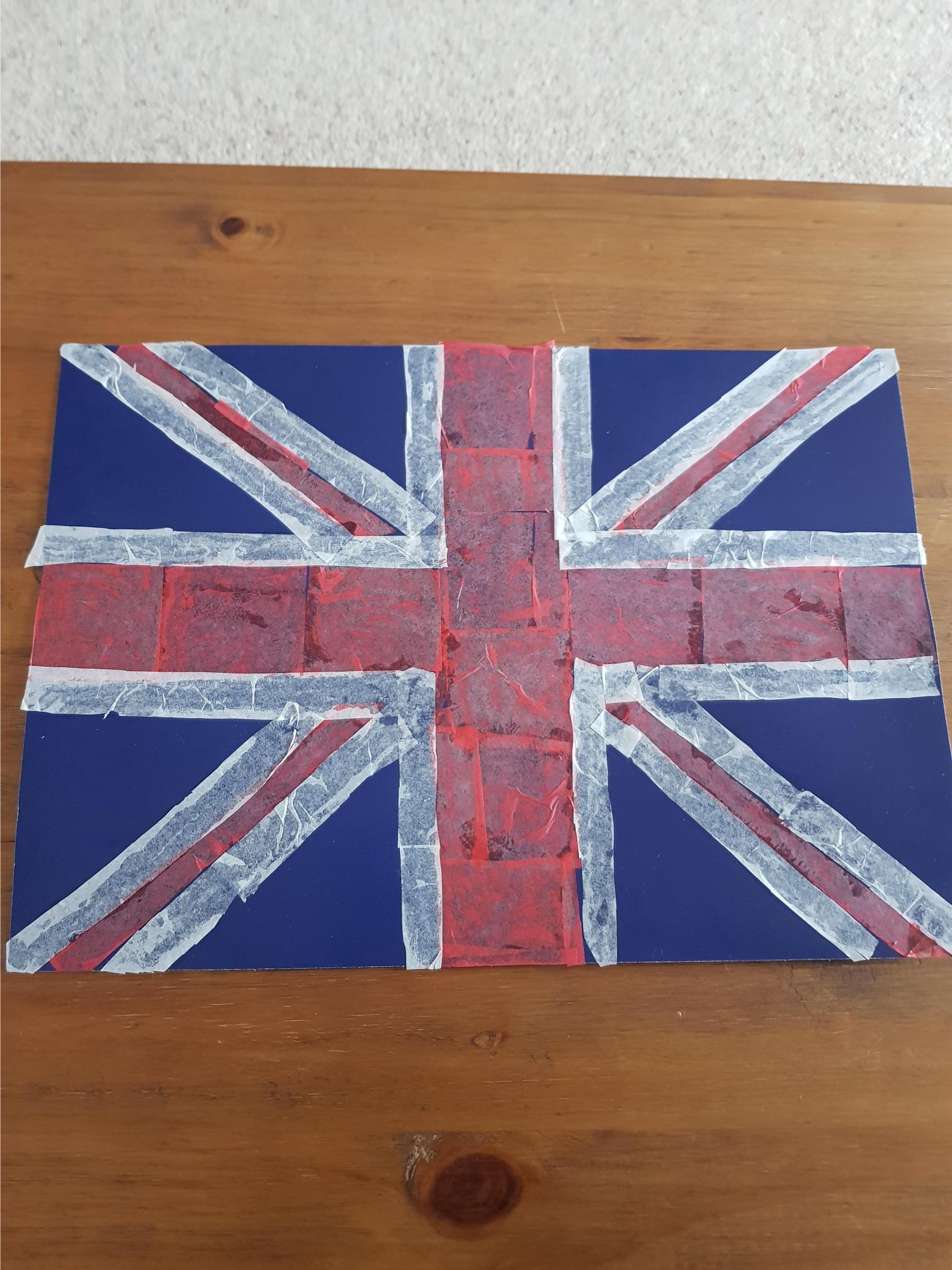
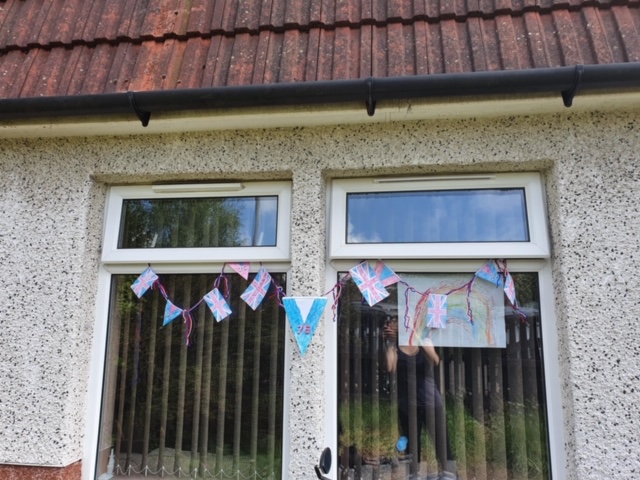
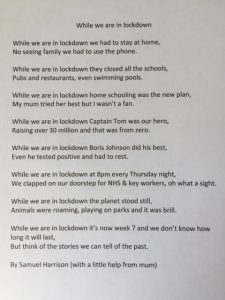
Thank you to the children of Edwinstowe May 2020.
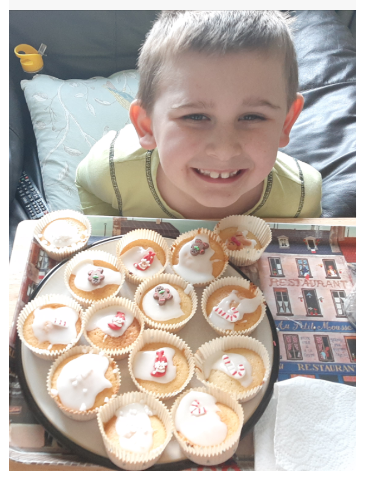
Thank you Samuel from King Edwin School – May 2020

Rufford Abbey, was the subject of Pete Smith’s talk to the Edwinstowe Historical Society which met in February. The meeting was well attended with 3 new members and 16 visitors joining the regular members. Originally a Cistercian abbey, it was partly demolished in the 16th century after the dissolution of the monasteries, and converted to a minor country house estate. Mr Smith talked about the succession of owners beginning in the 16th century with George Talbot, 4th Earl of Shrewsbury, until the 20th century when the property passed to Sir George, the 3rd Baron Savile, who was only 12 years old, at which time the trustees took the decision to sell the estate. After changing hands several times, and being used for military purposes during the 2nd world war, it was purchased by the Notts County Council and has now become a park open to the public, owned by Nottinghamshire County Council and managed by Parkwood Outdoors in co-operation with English Heritage.
Mr Smith highlighted the additions and alterations carried out internally and externally over the years, by well-known architects Anthony Salvin, John Hallam, and John Birch. Photographs showed the overcrowded rooms which were popular during the Victorian and Edwardian periods. These were busy times, too, because the bathhouse was converted into an orangery, the corn mill was converted into a saw mill, the brick-built stables were altered and re-roofed and the coach house, brew house, and water tower were built. Bess of Hardwick was a visitor and so was Edward V11 who liked to stay at Rufford when attending Doncaster races.
Sam Glasswell’s talk on Wed. 18th March will be “Pilgrim Links – Mayflower Celebrations”. This year marks 400 years since the Mayflower set sail from England. Then on Wed. 15th April we welcome Bob Massey whose talk is about Skegness, often known as “Nottingham by the Sea”.
 Edwinstowe Historical Society