 Edwinstowe Historical Society
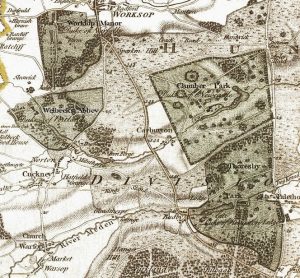 Chapman’s map, dated 1774 shows the layout of the estates.
THE DUKES OF NEWCASTLE
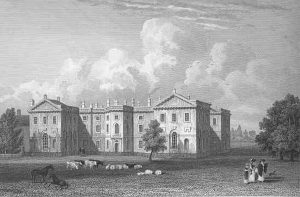
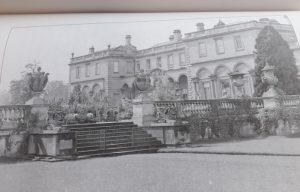
Clumber House was built between 1760 & 1772 by Stephen Wright for Henry Fiennes Pelham Clinton, the 2nd Duke of Newcastle under Lyne, and was situated in the park which John Holles, 1st Duke of Newcastle upon Tyne had created for Queen Anne, after receiving a licence in 1707 to enclose part of Sherwood Forest. This was a classical building of white freestone flanked by a square wing at each corner, with the central portion, which faced the lake, containing a light Ionic colonnade. The core of the house was the original ducal hunting lodge which had previously existed on the site. 4,000 acres of barren heath were landscaped into one of the most beautiful private parks in England, complete with a large man-made lake.
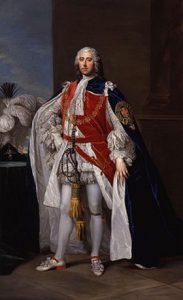 Henry Fiennes Pelham-Clinton, 2nd Duke of Newcastle-under-Lyne in the robes of the Order of the Garter, by William Hoare, c. 1752.
Henry the 2nd Duke inherited the title from his uncle, and married his cousin Catherine Pelham in 1744. He had no interest in national politics.
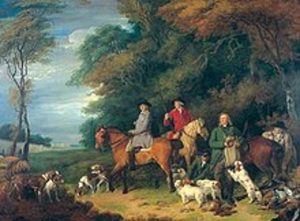
“The Return From Shooting” (1788) by Sir Francis Wheatley depicting The Duke of Newcastle, his friend Colonel Litchfield and the Duke’s gamekeeper, Mansell along with four Clumber Spaniels.
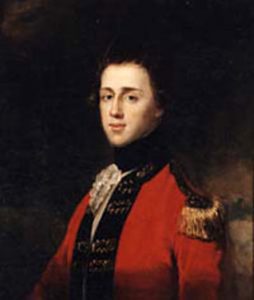 Thomas Pelham-Clinton, 3rd Duke of Newcastle. Lord Lieutenant of Nottinghamshire. Following the death of his father, Thomas , became the 3rd Duke of Newcastle. He fought in the American War of Independence. His rank being Major General. He died, at his country seat at Sunninghill in Berkshire, in May 1795, aged 42, from the effects of an emetic which he had taken for whooping cough, having held the dukedom for only a year. He was succeeded by his eldest son Henry.
1752-1795
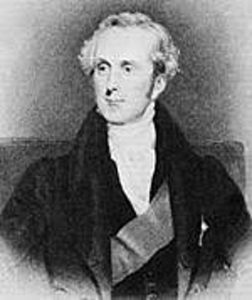 Henry Pelham Clinton became the 4th Duke. He too, was Lord Lieutenant of Nottinghamshire He was a renowned collector and filled Clumber with many of the finest objet d‘art including paintings by Rubens, Gainsborough, Hogarth, Reynolds, to name a few. He added the terraces, rock garden and formal lakeside walks.
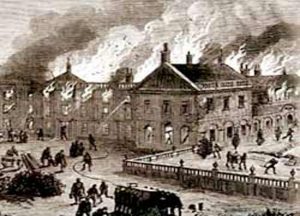
The Duke was a determined opponent of Parliamentary reform, and when news reached Nottingham on 8th October 1810 that the House of Lords had thrown out a bill designed to bring in reform there was much unrest in the town. On the morning of 10th March the mayor called a town meeting to discuss what they might do next. Although the meeting took place peacefully, a crowd of people subsequently went to Colwick Hall which they attacked, and then during the evening to Nottingham castle, which was burnt to the ground. The Duke retreated to his residence at Clumber Park which was fortified against the mob.. He was reported to have gathered together a force of 400 men, which included a troop of seventy yeomanry cavalrymen armed not only with muskets and sabres but also cannon.
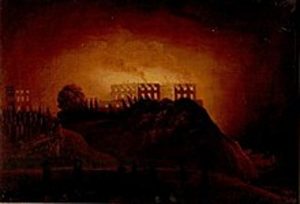
Nottingham Castle, owned by the Duke. A depiction of the fire in 1831.
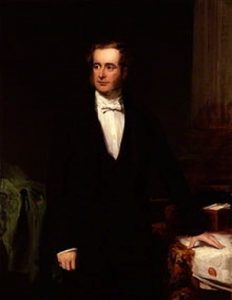
Henry Pelham-Clinton, 5th Duke of Newcastle and Secretary of State for War and Colonies. He married Lady Susan Hamilton on 27 November 1832. They had five children: The marriage was unhappy and the Duke and Duchess were divorced in 1850, after a considerable scandal in which the Duchess eloped with Horatio Walpole
1811 – 1864
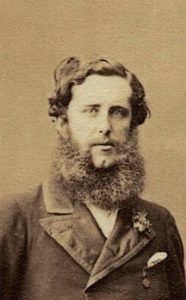 Henry Pelham Alexander Pelham-Clinton, became the 6th Duke of Newcastle. His taste for gambling resulted in his fleeing the country in 1860 to escape his debts, which had then reached £230,000. In 1861, he married Henrietta Hope, heiress of the wealthy Henry Thomas Hope, in Paris. As part of the marriage settlement, his debts were paid and an income of £50,000 a year settled on the couple.
1834 – 1879
1879. Fire destroyed much of Clumber House together with the loss of many fine artworks.
The 7th Duke was Henry Pelham Archibald Douglas Pelham Clinton. In 1889 married Kathleen Florence May Candy.

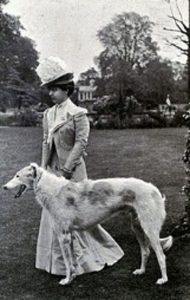
He was a keen angler as well as a photographer. In 1889 he married Kathleen Florence May Candy seen here with one of her Borzois. In celebration, the ship’s guns were fired on board the “Lincoln” as well as those on the Battery. One of the Duke’s achievements was the restoration of the fortunes of his family estate. After the fire In 1879 which destroyed much of Clumber House together with the loss of many fine artworks, he had it magnificently rebuilt to designs by the younger Charles Barry (whose father was the famous Sir Charles responsible for the Palace of Westminster.) He replaced the lost eighteen rooms in the centre of the house with an enormous entrance hall, which featured balustraded galleries, tessellated pavements and various niches for the surviving statuary. The duke was also involved in the design and building of the magnificent St Mary the Virgin Chapel in the grounds. The Duchess was a well-known show judge and dog breeder who influenced the Borzoi, Fox Terriers, Whippets, Scottish Deerhounds and Clumber Spaniels
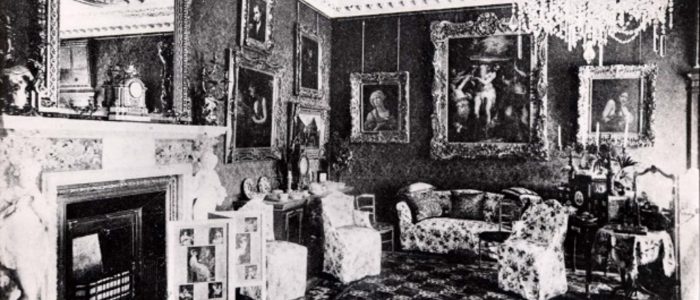
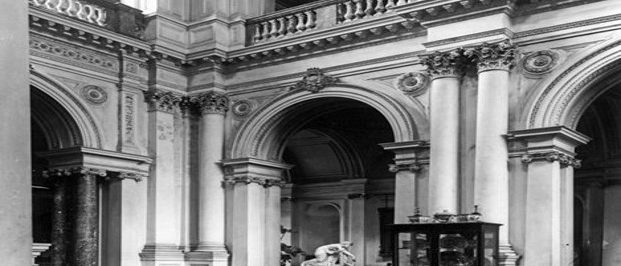
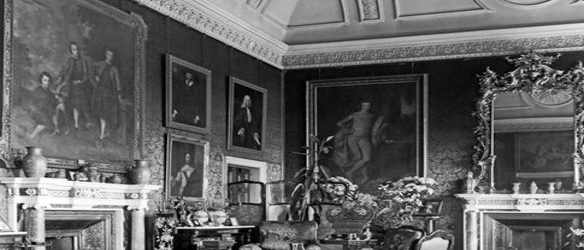
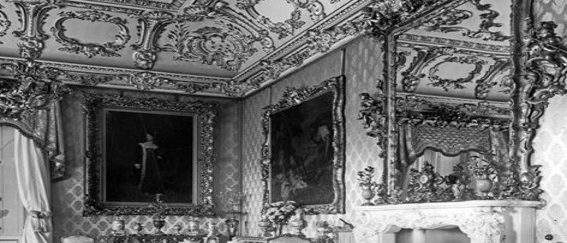
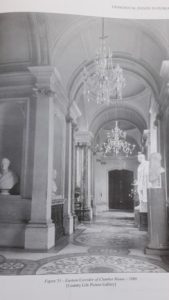
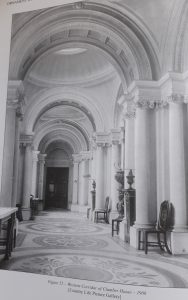
Eastern and western corridors
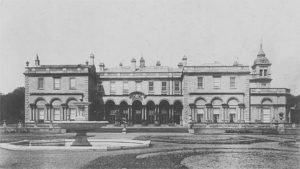
Clumber House c.1900
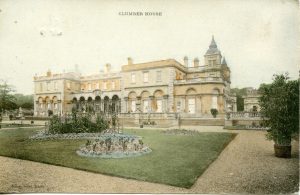
1907
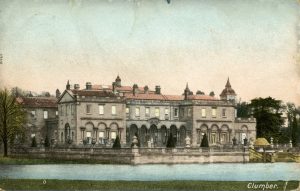
1914
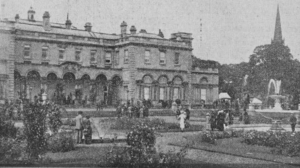
Clumber House: Visitors in the grounds of the house at a garden fete in August 1923. Image: The British Newspaper Archive.
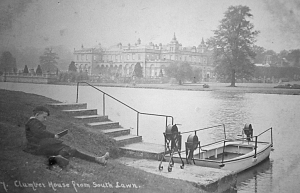
Clumber House from the south lawn with winch for the ferry to cross the lake.
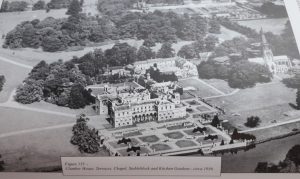
1936
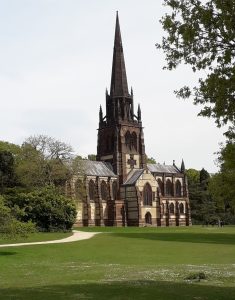 St Mary the Virgin Chapel Photo M Wright
ANOTHER FIRE IN APRIL 1912 AND DEMOLITION
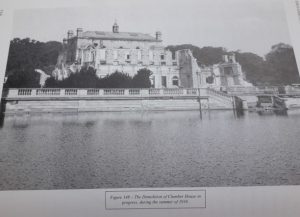
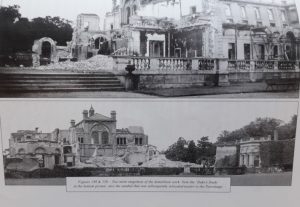
Demolition during 1938
Another fire in April 1912 ravaged the upper two floors, which may have added to the burden of the estate. After the Duke’s death in 1928 the family spent little time at Clumber. When the decision to demolish the house, taken by the Earl of Lincoln, the 8th Duke’s son who had inherited it, was announced in the local paper it stated that “the decision to completely demolish the mansion has been taken with great reluctance by the present owner…but it has been necessitated by heavy taxation”. Though it played a part, a more significant factor was that Clumber had been built for a different age. Clumber was from the age of huge, lavish house parties and vast wealth. With the passing of the former and major pressures on the latter, houses on this scale were just no longer sustainable. The sale of the library raised £70,000 (approx. £3m) and other contents £60,000. Many pieces of the Clumber House furniture and carpets, which had not been offered for sale were stored in the Chapel and the Duke’s study, and remained there throughout the war. The most valuable pieces, including crates of porcelain were hidden from view by piling lesser quality items on top. Other hideaways included the staff billiard room and even RAF Cranwell. The house was eventually demolished in August 1938. In 1946 the park and outbuildings were purchased by the National Trust.
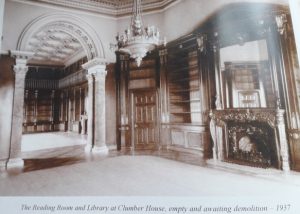
The Reading Room
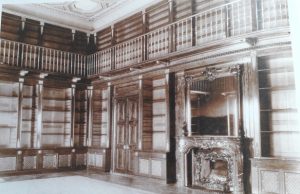
The Library
MILITARY ACTIVITIES
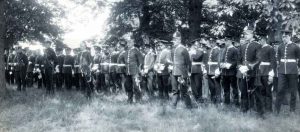
1913. Tunic Order Parade at Clumber Camp. “A” and “B” Companies
On 27th July 1913 the 6th Battalion of the Sherwood Foresters proceeded to Clumber Park for their annual training. Seven hundred and thirty-nine Officers and men attended the Camp for 15 days, During the Camp the men were also able to enjoy various recreational events, which included amongst other activities, a Cricket match between the Battalion and the Clumber Cricket Club . Also swimming in the lake was very popular due to the dry hot summer of that year.
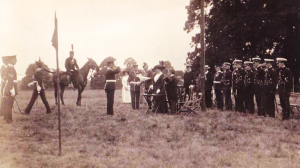
1913. Foresters Medals being awarded by the Duke and Duchess of Newcastle. 1913
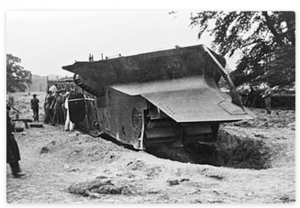
During the second world war the army requisitioned Clumber Park as an ammunition store and transit camp. In 1941, Clumber was used for secret trials using a trench digging tank, a naval land machine called ‘White Rabbit’ and a cultivator called ‘Nellie’. The tank could move 100 tons of earth in a minute. Winston Churchill, using the name ‘Colonel Warden’, visited Clumber in November of that year, to inspect ‘Nellie’.
THE PLEASURE GARDENS AND LEGACIES
Visitors strolling round the grounds today are still able to enjoy the plans set out by the Dukes of Newcastle.
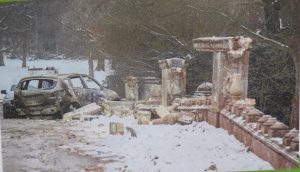
Bridge. Damage caused by vandals in 2018
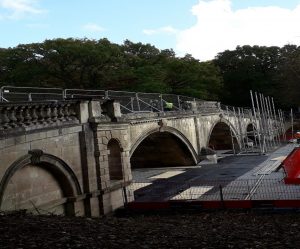
Clumber Bridge repaired. Photo M Wright
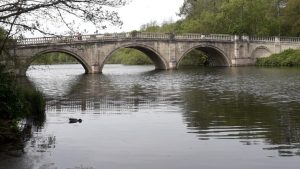
The Bridge back to normal. Photo M Wright
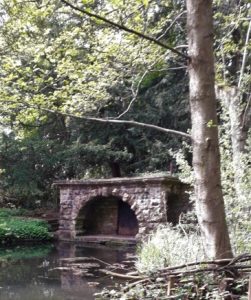
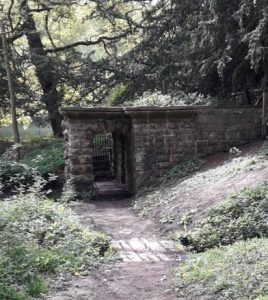
The Grotto Photo M Wright
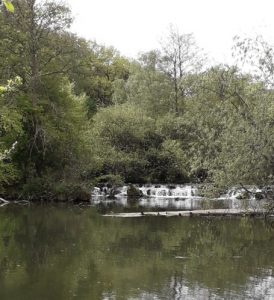
The Cascade Photo M Wright
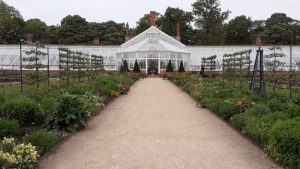
Glass House Photo M Wright
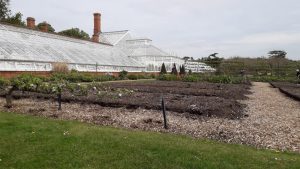
Glass House Photo M Wright
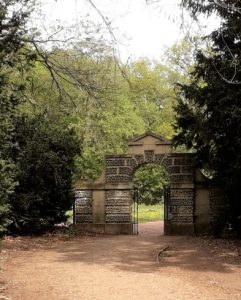
Pleasure Garden Entrance Photo M Wright
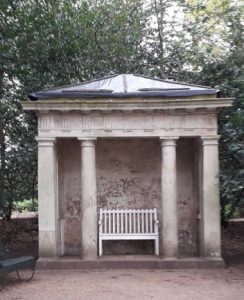
Greek Temple Photo M Wright
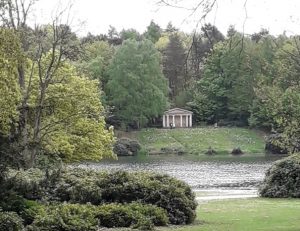
Greek Temple Photo M Wright
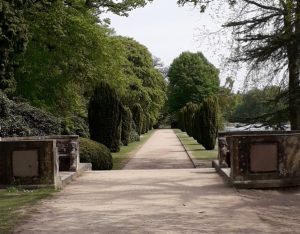
The Lincoln Terrace Photo M Wright
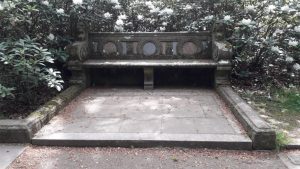
Roman Doric Seat Alcoves Photo M Wright
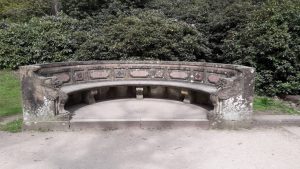
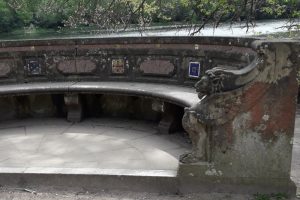
Roman Doric Seat Alcoves Photo M Wright
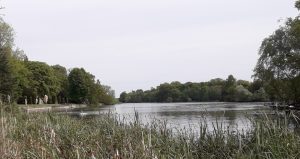
The River Poulter was dammed to make the lake which covers almost two miles in length. Photo M Wright
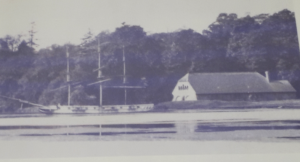
The Lincoln and the Boathouse
A boathouse was situated at the end of Lincoln Terrace where the boat dock can still be seen. The Lincoln was the largest of the vessels favoured by the Dukes. The frigate was a third size replica of a naval frigate measuring 32 feet in length. During the seventh Duke’s time, he would invite a privileged few aboard the Lincoln to fish off the decks and help him stage mock battles.
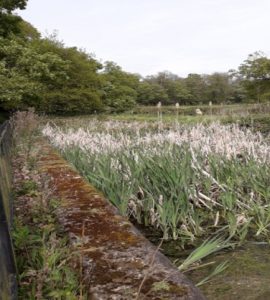
The remains of boat dock very overgrown. Photo M Wright
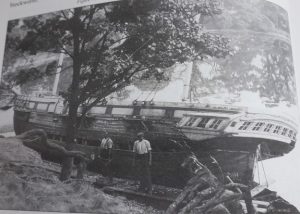
The Lincoln under repair.
By 1911 the Lincoln was in a poor state of repair, with the Duchess thinking it past saving. The Duke however spent £200 on new rigging, repainting and repair work and the Lincoln was sea (or lake) worthy again.
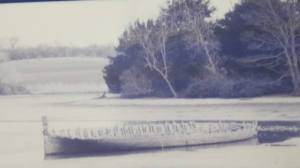
Wreck of the Lincoln
During the 1940’s the derelict Lincoln was accidentally set on fire and sank. The wreck was revealed in 1987 and again in 1998 when coal mining caused subsidence and the water level dropped.
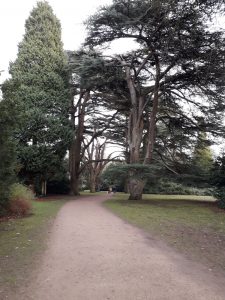
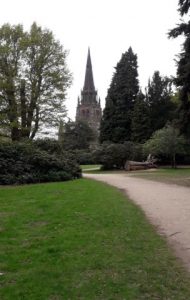
The Gardens Photo M Wright
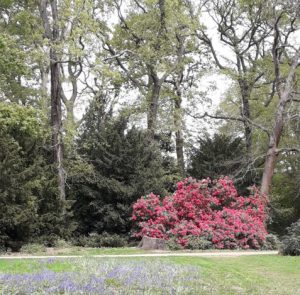
The Gardens Photo M Wright
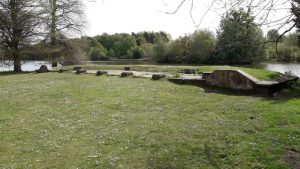
A miniature gun battery, armed with 26 cannons was constructed at the lakeside so battles could be staged with the miniature boats. One of these was the “Lincoln”, which could return fire from its own guns engaging with those on shore in combat. Photo M. Wright
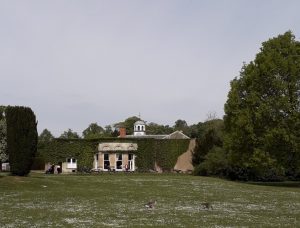
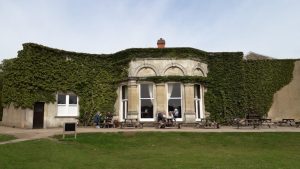
The sole surviving part of Barry’s work of 1879-80 is the ‘Duke’s Study’ near the lake, with bay windows flanked by pilasters. Photo M. Wright
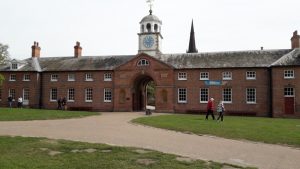
Also surviving are the 18th and 19th century stables and the 18th century brick coach house. Photo M. Wright
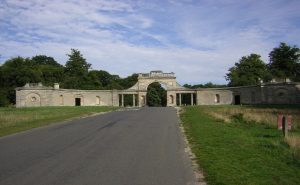
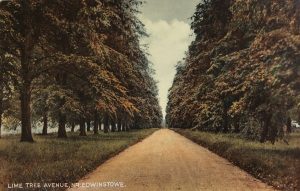
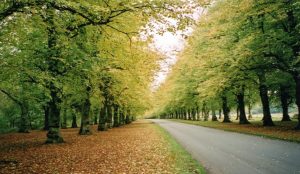
Apley Head entrance to Lime Tree Avenue. Photo M. Wright
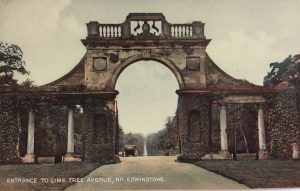
One of 5 entrances to the estate. Apley Head Gate. Entrance to Lime Tree Ave. created for the 5th Duke is 2 miles long.
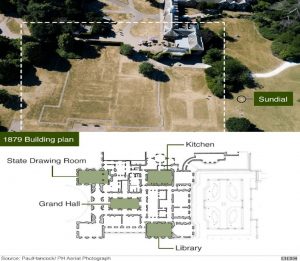
Recent Archaeological digs have uncovered cellars, pottery, mosaic flooring and decorative plaster work. Also the hot weather revealed outlines of rooms and corridors. Photo M. Wright
The 10th Duke of Newcastle. Brief succession to dukedom and earldom. Edward Charles Pelham-Clinton, 10th Duke of Newcastle-under-Lyne succeeded his third cousin in the earldom and dukedom in November 1988. He died one month and 21 days later, aged 68, unmarried. As all other heirs male from the second duke’s line had died, the dukedom became extinct, but his title of Earl of Lincoln was inherited by a very distant kinsman. It was interesting to read that recently Lady Patricia Pelham Clinton Hope, eldest daughter of the 9th Duke of Newcastle under Lyme, was visiting Clumber Park to plant a Cedar of Lebanon tree as part of the Queen’s Green Canopy initiative.
Acknowledgements :
- A History of Notts, Cornelius Brown. 1896;
- Ornament of Sherwood Forest, John Fletcher;
- Lost Houses of Nottinghamshire, Philip E Jones
- NT Clumber Park’s Lost Treasures;
- Our Nottinghamshire, Pevsner;
- The Great Houses of Notts and country families, Leonard Jacks. 1881;
- Wikipedia