 Edwinstowe Historical Society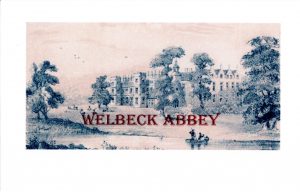
The Dukes of Newcastle, and Earls and Dukes of Portland have all played a part in the development of Welbeck Abbey, from the time of the dissolution of the monasteries to the present day.
Referred to as “The Dukeries” the area contained four ducal seats. Namely Worksop Manor; Welbeck Abbey; Thoresby Hall; and Clumber House. Also a fifth large country house was Rufford Abbey.
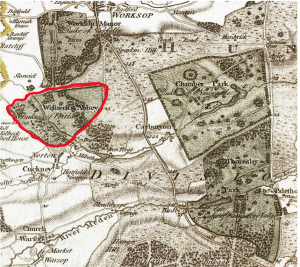
Chapman’s map dated 1774 shows the layout of the estates. Referred to as “The Dukeries” the area contained four ducal seats. Namely Worksop Manor; Welbeck Abbey; Thoresby Hall; and Clumber House. Also a fifth large country house was Rufford Abbey.
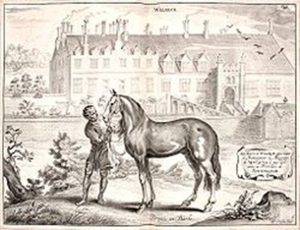
Welbeck Abbey in the 17th Century. Wikipedia
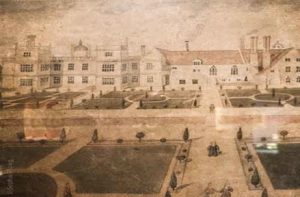
Following the dissolution of the monasteries, Sir Charles Cavendish, son of Bess of Hardwick purchased the abbey in 1607. He commissioned Robert Smythson to replace the monastery’s remains with an enormous new house on a courtyard plan but only a fragment of his proposal was built – the range now known as the Oxford Wing.
Welbeck Abbey from the South-West. A detail of a watercolour by S.H. Grimm, c. 1780. Probably taken from an older painting, now lost. It shows the Abbey in the 17th century. With on the left Smythson’s wing and on the right parts of the old monastery.
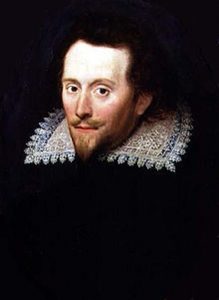
William Cavendish 1593 – 1676 (later 1st Duke of Newcastle)
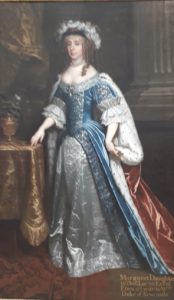
Following the death of his first wife, William married Margaret Lucas who was an English philosopher, poet, scientist, fiction writer and playwright. Her work was published under her own name at a time when most women writers remained anonymous. Her utopian romance The Blazing World is one of the earliest examples of science fiction. She also enjoyed designing her own clothes.
Welbeck passed to his son William Cavendish, 1593-1676 who became the first Duke of Newcastle. William served Charles 1st. His loyalty cost him hard for in 1644 after the battle of Marston Moor, when royalist troops commanded by Cavendish were defeated, he fled with his sons into exile for 16 years. He was one of the most brilliant horsemen in 17th century Europe, which was embodied in his riding schools at Welbeck and Bolsover, and laid out a five-mile racecourse at Welbeck. He wrote two acclaimed manuals on the art of “manège” – this being the ancestor of the modern equestrian discipline of dressage. When Restoration allowed Cavendish returned to reclaim Welbeck.
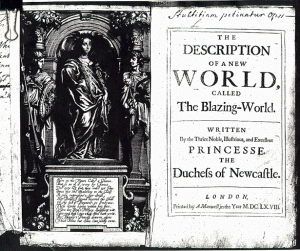
Science fiction written by Margaret, the Duchess of Newcastle.
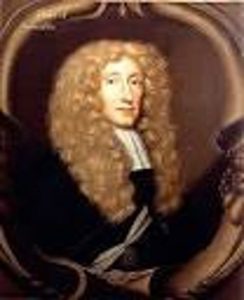
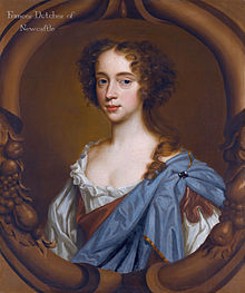
Henry Cavendish 2nd Duke of Newcastle 1630-1691 Frances Pierrepont,1630-1695
Henry Cavendish, 2nd Duke of Newcastle was born in Edwinstowe. In 1652, he married Frances Pierrepont in Thoresby, daughter of The Hon. William Pierrepont :On succeeding his father in the title Duke of Newcastle and the family seat of Welbeck Abbey he proved to be a loyal supporter of James II, despite his concern at the king’s policies favouring Roman Catholics. At the accession of William and Mary, Henry resigned all of his appointments, refused to take the oaths to the new king and queen, and lived in retirement at Welbeck Abbey. He died in 1691, leaving no surviving male heir and thus the dukedom became extinct. Welbeck Abbey and other East Midlands estates passed to his favourite daughter Lady Margaret Cavendish, who had married John Holles in 1690.
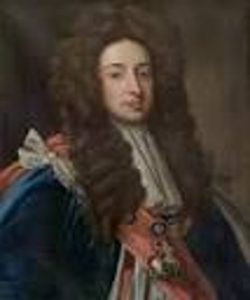
John Holles, 1st Duke of Newcastle 1662 – 1711)
In 1690, he married his first cousin Lady Margaret Cavendish,, a daughter of Henry Cavendish.
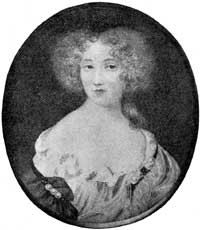
Lady Margaret Cavendish. 1661 – 1716
John Holles for whom the dukedom was recreated in 1694. It was a condition of the bequest that the issue of their marriage must retain the name Cavendish, and that the estates should be preserved undivided. John and Margaret had one child, Lady Henrietta Cavendish Holles (1694-1755).
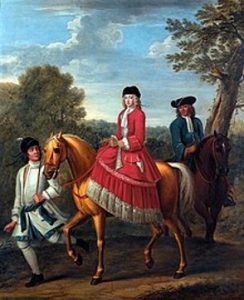
Henrietta Harley, Countess of Oxford and Countess Mortimer (1694–1755), Married Edward Harley, 2nd Earl of Oxford and Earl Mortimer (1689 – 1741) on 31st August 1713 at Wimpole Hall. She brought, through inheritance, Welbeck Abbey and Wimpole Hall in Cambridgeshire. Pioneer of Gothic revival rebuilt Welbeck, favouring Gothic style of architecture.
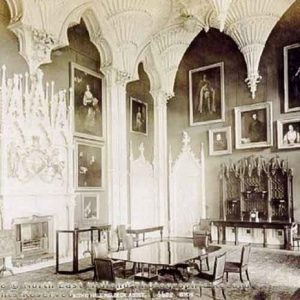
Gothic Hall Completed in 1751
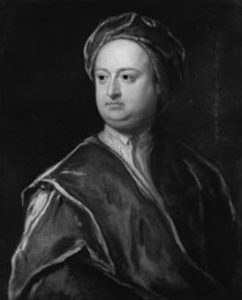
Edward Harley, 2nd Earl of Oxford and Earl Mortimer.
He also acquired a considerable amount of land in the West End of London. Many of the now famous streets took their names from Harley connections – primarily Harley Street and Oxford Street.
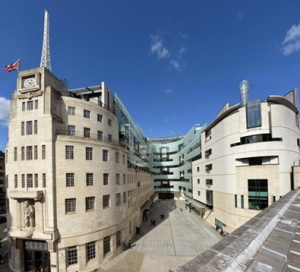
Harley Street and home of BBC.
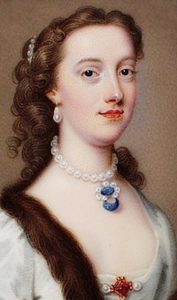 Their daughter Lady Margaret Cavendish Harley, married William Bentinck 2nd Duke of Portland in 1734. Margaret was the richest woman in Great Britain at the time. Over 50 years while she and the Duke settled at Bulstrode, it was transformed into a remarkable combination of family retreat, university college and museum of natural history, Her collection included costly art objects such as the 1st century AD Roman cameo glass vase, which became known as the Portland Vase . After her death the Duchess’s collection was sold at an auction which lasted for 38 days. After the sale the 3rd Duke bought back several items of particular importance, including the Portland Vase and a sardonyx cameo of the Emperor Augustus. Both are now in the British Museum. Margaret’s mother (Henrietta) decided to live at Welbeck.
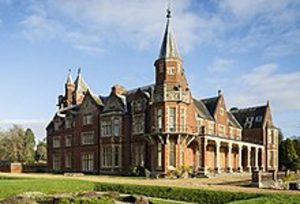
Bulstrode Park
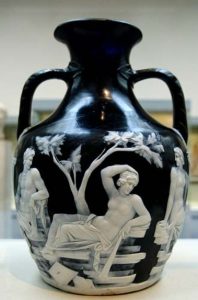 Portland Vase
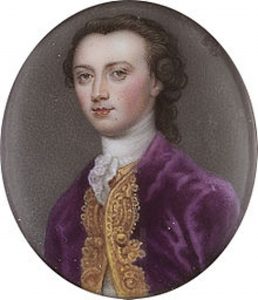
William Bentinck, 2nd Duke of Portland and Lady Margaret Hatley, had six children. The Duke did not seek any public office, but focused on his family life at the family seat, Bulstrode Park. William’s grandfather was Hans William Bentinck, 1st Earl of Portland.
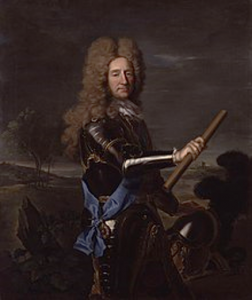 Hans William Bentinck, 1st Earl of Portland was a Dutchman who came to England to help his close friend William of Orange secure the English throne in 1688. As a reward he was given the title 1st Earl of Portland.
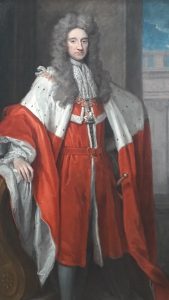 Henry Bentinck, 1st Duke of Portland (1682 – 1726) The second, but eldest surviving son of William Bentinck, 1st Earl of Portland. He was created Marquis of Titchfield and Duke of Portland on 6 July 1716.
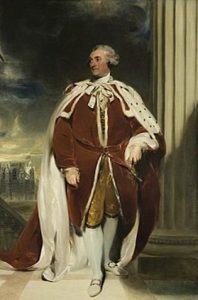
William Henry Cavendish-Bentinck, 3rd Duke of Portland, He had two terms as the Prime Minister of Great Britain. He had lived expensively: with an income of £17,000 a year (worth £577,000 in 2005), he had debts at his death computed at £52,000 (£1.76 million in 2005), which were paid off by his succeeding son by selling off some property, including Bulstrode Park. Made substantial alterations to Welbeck in 1763. Collaborated with Humphry Repton celebrated landscape designer for improvements to the park.
Welbeck 1829
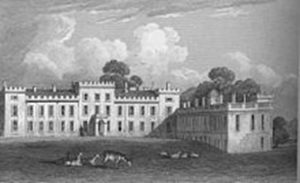
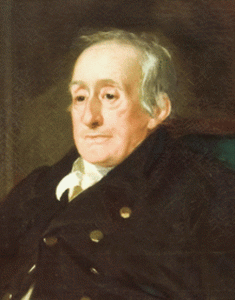 William Cavendish-Scott-Bentinck, 4th Duke of Portland, The 4th Duke was heavily involved in the management of the family estates, and, after finding them burdened with debts when he inherited, was highly successful in reversing the financial situation. He was particularly interested in farming methods gaining a reputation as an agricultural improver. Welbeck became the family’s principal seat.
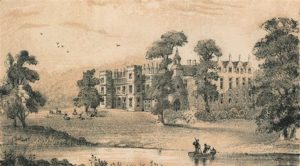
1850
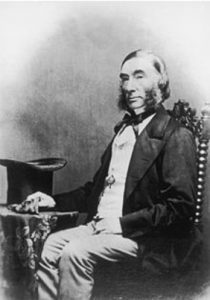
William John Cavendish-Scott-Bentinck, 5th Duke of Portland . During his dukedom a vast riding school was constructed, covered by a curved iron and glass roof which enabled training at night and in winter. Also the Tan gallop roofed in glass and iron, allowed horses to exercise under cover. (The roof was taken down in the 20th century and interior subdivided into artists’ studios and workshops for the Harley Foundation. The building housing the Portland Collection is also housed within its walls.)
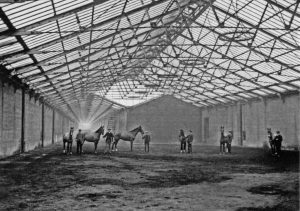
The Tan Gallop c. 1870. Enabled horses to exercise under cover.
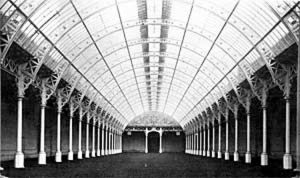
The riding school built by the 5th Duke of Portland in the 1860s.
He also constructed stables, a dairy, a laundry, hot houses and offices, while no fewer than 48 lodges were dotted around the estate to provide homes for employees. A series of tunnels was excavated, one nearly two miles long provided the Duke with secret passage through his park when on his way to Worksop. From here the Fifth Duke would travel to Worksop Station where his carriage would be loaded onto a freight car to go to London; thus, he would be able to travel door-to-door without leaving his carriage. The 5th Duke never married and was succeeded by his cousin, William Cavendish-Bentinck, a 22-year-old lieutenant in the Coldstream Guards.
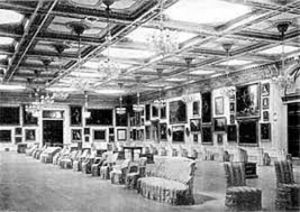
Underground ballroom used as a picture gallery. 1870
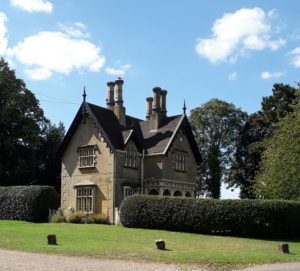
One of the 48 Lodges on the estate, provided by the Duke.
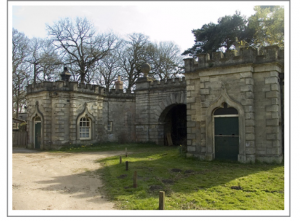
Entrance to tunnel
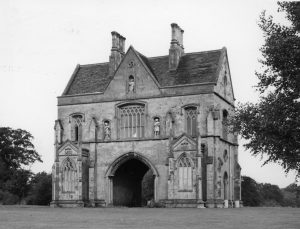 Archway House
Begun in 1842, Archway House was originally intended to be the first of 20 identical structures (or lodges) to be constructed on the estate. Only one was built. In design Archway House is based on the medieval gatehouse at Worksop Priory and was sited on the ancient Broad Drive positioned so as the view through the central arch would focus on the ‘Centre Tree’ in Sherwood Forest, 1 ½miles away.
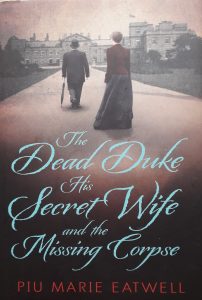
In 1896, after the 5th Duke’s death, an application was made by the widow of Walter Thomas Druce, for his father’s body to be exhumed from the Druce family vault at Highgate Cemetery. She claimed that her father-in-law T.C. Druce was in fact the 5th Duke of Portland, which meant that her children would be heirs to the Duke’s fortune. The coffin was finally opened in 1907 and was found to contain the body of T.C. Druce. The Druce-Portland case, collapsed.
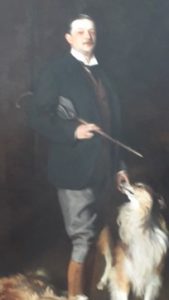
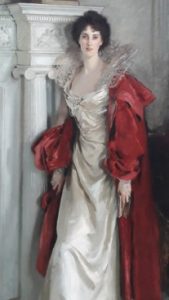
William Cavendish Bentinck Winifred, Duchess of Portland
6th Duke (1857 – 1943) (1863 – 1954)
William John Arthur Charles James Cavendish-Bentinck, 6th Duke of Portland. At first sight the Duke was horrified at the sorry state of the house. The only habitable rooms were the four or five rooms used by the 5th Duke in the west wing. All were painted pink, with parquet floors, all bare and without furniture and almost every room had a water closet in the corner. William was persuaded to occupy the house only by a promise from his stepmother, Lady Bolsover, that she would organise its restoration. Within fewer than eighteen months she had made Welbeck habitable. This was beginning of Welbeck’s social renaissance, reinforced by the Duke’s marriage in 1889 to a childhood friend, Winifred Dallas-Yorke.
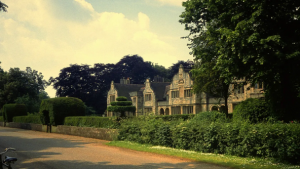
Alms-houses known as the Winnings. The Duke was a successful owner of race horses and in 1900 built a range of alms-houses on the estate, paid for entirely out of prize money.
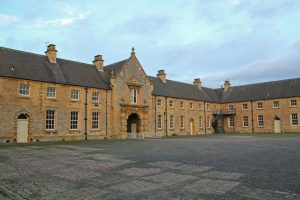
Stable Block- Welbeck Abbey
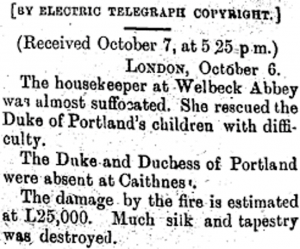
In October 1900 one of the oldest parts of the building, the Oxford Wing, burned down; The estate fire brigade was joined by brigades from Sheffield and Worksop. Tenants on the estate and colliers straight from the pit helped to remove most of the contents from 80 rooms. The wing was rebuilt and Welbeck became a comfortable modern residence.
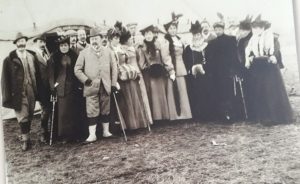
The family enjoyed a busy social life, The British royal family were frequent visitors, and they entertained the King of Siam and the Kings and Queens of Portugal, Spain and Belgium. In 1913 Archduke Franz Ferdinand of Austria visited and when out shooting with the Duke, because of rather deep snow on the ground one of the loaders fell down. This caused both barrels of a gun he was carrying to be discharged, the shot passing within a few feet of the Archduke.
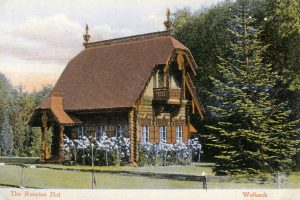
The Duke organised the building of the Russian Log hut which was the venue of picnic parties. Its brightly coloured interior was kept in immaculate condition as were the surrounding lawns and flower beds. Sadly, neglect necessitated demolition in the mid-1950’s.
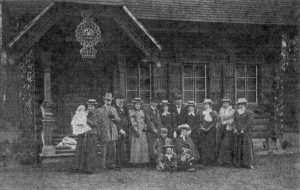
Royal Family group. C.1900
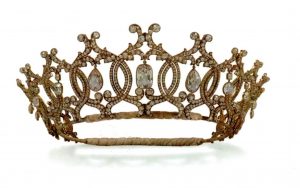
In 1902 the duke commissioned Cartier to make a tiara using diamonds that he supplied. The Duchess wore it at the coronation of Edward vii that year. Sadly, the tiara was stolen in November 2018 and has not been found.
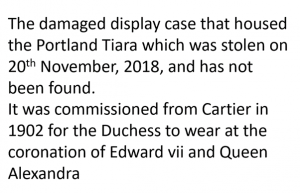
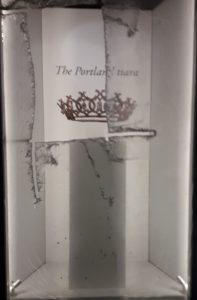
Damaged display case.
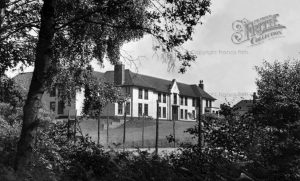
In 1928, Harlow Wood Hospital was built on land donated by the Duke of Portland to enable the treatment of children who, at the beginning of the twentieth century (and before) were deformed, and known as ‘Cripples’. Later the hospital became known as Harlow Wood Orthopaedic Hospital renowned for the treatment of coal miners who needed therapy to help them return to work. In addition, during WW2, special wards were added to cater for wounded soldiers.
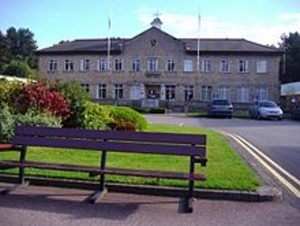
Portland training college. Founded in 1949, as an institution for the training of men who had been disabled through war injuries and for miners injured or made ill through working in that industry. The college’s early development owed much to the energy, enthusiasm and vision of Winifred, Duchess of Portland.
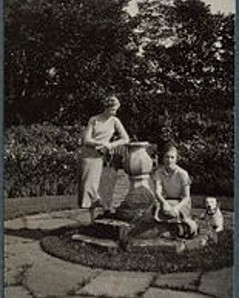 Lady Anne Cavendish Bentinck. William Arthur Henry Cavendish-Bentinck, was the 7th Duke and when he died in 1977 the estates were inherited by his only surviving child, Lady Anne Cavendish Bentinck, and on her death in 2008, she bequeathed Welbeck to her nephew William Henry Marcello Parente. The title Duke of Portland, which passed to a distant cousin of lady Anne, became extinct with the death of the 9th Duke in 1990. However, the Earldom of Portland was inherited by a male line descendant of the first Duke’s younger brother.
 Timothy Bentinck 12th Earl of Portland. Born 1st June 1953, Tasmania, New Zealand.The 12th and present Earl of Portland is the actor Tim Bentinck who has played leading roles in film, television, theatre and radio, including the part of David Archer in the BBC Radio 4 soap opera “The Archers.”
Between 1914 and 1919, the army set up camp in the park and the kitchen block was used as an army hospital. After World War 11, Welbeck was let by the Dukes to the Ministry of Defence and operated as Welbeck College, an army training college, until 2005, when the college moved to a purpose-built facility at Woodhouse Eaves near Loughborough.
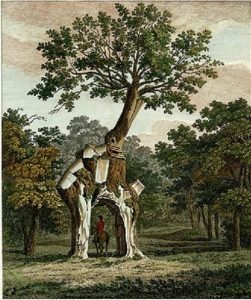
Sketch of Greendale oak. The park contained many remarkable trees which were recorded by Major Rooke in his book “Remarkable Oaks in Welbeck Park”. The Greendale Oak was one with special mention due to the fact that in 1724 Henry Bentinck acted on a bet made at a dinner party, that he could drive a ‘carriage and four’ through the tree. To achieve this feat, he had an arch 6′ 3” wide and 10′ 3” high cut through its trunk. In cutting this arch it was clear that the surviving trunk would have been unable to support the major branches of the tree, and were therefore all removed. The wood however did not go to waste. The Countess of Oxford, had a cabinet made of the oak, which is now at Welbeck. Incidentally, the carriage was a miniature vehicle drawn by ponies.
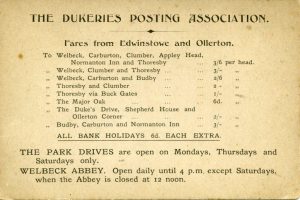
A select number of Worksop coach proprietors were allowed to drive their vehicles along a fixed route through Clumber, Thoresby and Welbeck parks each Tuesday, Thursday and Saturday of the summer season.
Sketch of Abbey c.1788
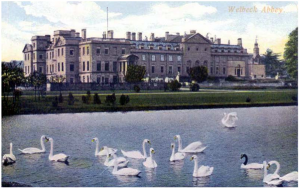
Photo 1900
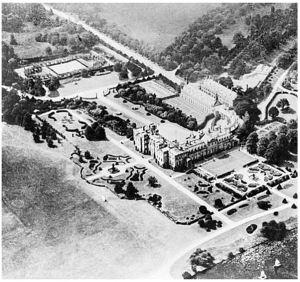
Aerial view 1925
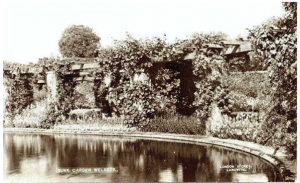
Garden
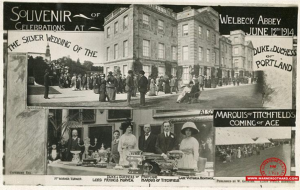
Celebration at Abbey
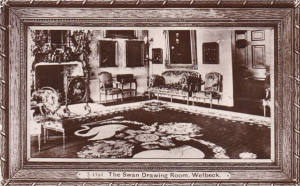
Swan drawing room
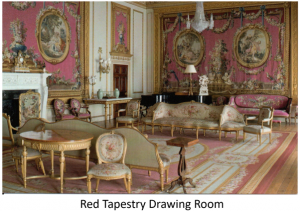
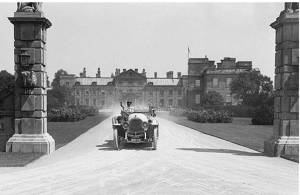
Main drive
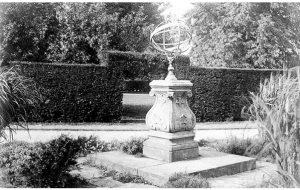
Garden statuary
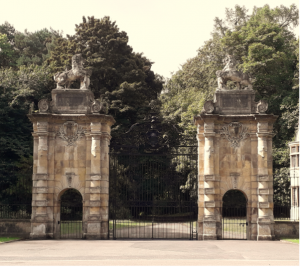
Lion gates at Sparken Hill, Worksop. No longer used except for visiting royalty.
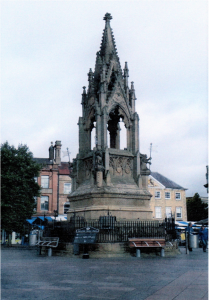
Bentinck Memorial, Reminders of the family may be found locally, with squares, streets, crescents and avenues bearing the name of Portland, Bentinck, Welbeck, Bolsover, Titchfield and Morven. Mansfield has Titchfield Park and the Bentinck memorial, and we even have Portland Row in Edwinstowe.
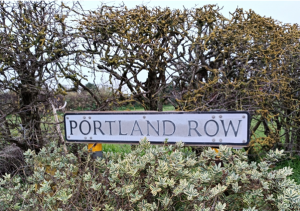
Portland Row. Edwinstowe